This blog post is adapted from a paper I wrote in 2007 called, "Modern Health, Primitive Wisdom: American Health History and the Findings of Weston A. Price." Enjoy!
One dietary characteristic that was readily apparent in the traditional primitive cultures of Weston A. Price’s studies was the lack of modern, processed foods. There was in these cultures a widespread use of foods high in nutrient content and comparatively low in calories. When processed foods replaced traditional foods, physical deformities and ill health followed. This pattern of less consumption of nutrient-dense foods and greater consumption of processed modern foods has happened in the United States just as it has in the primitive cultures of the world.
A look around the American population with Dr. Price’s discoveries in mind quickly reveals the state of health in our country today. It's common for modern Americans to require braces and other dental corrections, as well as frequent visits to the doctor due to general illness, such as flu, colds, and other symptoms of lowered immunity. As Dr. Price noted in Nutrition and Physical Degeneration, it only takes one generation of men and women who regularly displaced their native foods with processed foods to give birth to children displaying physical irregularities and exhibiting lowered immunity to disease. These deteriorations are now commonly observed in modernized societies, like the United States, where a large proportion of the foods eaten are processed and devitalized.
Comparing American eating and disease patterns in 1900 to those in 2000, one can find several significant changes that have taken place over the last century. In 1900, Americans ate mostly whole foods, although substantial amounts of processed foods were eaten as well. The whole foods eaten by turn-of-the-century Americans included untrimmed meats from pasture-fed animals, fresh vegetables and fruits, grains, and fats like butter, lard, and coconut oil. Of course, this diet differs significantly from the foods Americans eat today: vegetable oils, refined and “enriched” grains, simple starches, sugar, and factory-reared grain-fed meats (in a few words: fast food). Table 1 provides an overview of the changes in American disease patterns before (1900) and after (2000) these processed foods fully crept into the food supply.
Table 1. Leading Causes of Death in 1900 & 2000*
1900_________________% Total_______2000__________________% Total
Tuberculosis.......................11.3...........Diseases of Heart.................31.4
Pneumonia.........................10.2...........Cancer .................................23.3
Diarrheal Diseases..............8.1............Stroke...................................6.9
Heart Disease......................8.0...........Lung Disease........................4.7
Liver Disease.......................5.2...........Accidents..............................4.1
Injuries.................................5.1..........Pneumonia & Influenza.........3.7
Stroke..................................4.5...........Diabetes Mellitus...................2.7
Cancer..................................3.7...........Suicide................................1.3
Bronchitis............................2.6...........Kidney Diseases....................1.0
Diphtheria...........................2.3...........Liver Disease & cirrhosis..........1.0
*Adapted from Food Politics (Nestle 2002, 32)
In Table 1, it can be seen that the shift in American health over the last century has been one of major transition. In 1900, many deaths were due to infectious diseases or injury (6 of 10). This was an era when hygiene was not fully understood and such untimely deaths were commonplace. Heart disease and cancer -- the diseases of modern man -- are seen occurring in moderate percentages during this time. Flash forward to 2000, following many years of processed food consumption, and a very different picture is painted. Almost all of the top diseases (8 of 10) causing death at the time of the millennium are chronic degenerative conditions. The numbers for heart disease and cancer top the list, increasing by four and six times respectively compared to 1900.
The drastic changes in American disease patterns require a broad perspective to fully comprehend. As stated before, in addition to dietary changes, many environmental changes (crowded living conditions and an inadequate food supply) no doubt had a prime role to play in the shift in health that took place over the last hundred or so years. This is one reason why the average lifespan in the United States in 1900 is commonly believed to be far less than it is today. The average lifespan data during this time is also influenced by untimely deaths, such as infectious disease, injury, lack of food, and miscarriages.
Stay tuned for the next post titled, "Were Early Americans Really Living Shorter Lives?"
Wednesday, April 29, 2009

Saturday, March 28, 2009
Storm & Family: Degenerating Raw Vegans
While individual dietary experimentation can be fascinating, far more valuable information can be gained by observing entire groups of people on certain diets. Weston A. Price's studies are a good example of this, as each unique primitive group he came across displayed varying levels of health on varying diets. What they had in common was beautiful cavity-free teeth and freedom from degenerative disease. All were healthy and vibrant beyond a modern person's wildest dreams. All included animal foods in their diet.
With this in the back of my mind, a friend of mine informed me of a family of 100% raw-food vegans. She handed me a DVD of the family that endorsed their diet and themselves as the ultimate way to optimal wellness. She simply said to me, "I think you'll find this very interesting."
Storm has been eating a raw-vegan diet of fruits, vegetables, nuts and seeds in their natural unheated state for over 30 years and is known for his body builder's physique. At 60 he looks far younger than his years. Jinjee started eating a raw diet 15 years ago. Her before and afters show her weight loss transformation. Our family is 100% raw-vegan and thriving! On this site we share our photos and stories, photos of the kids growing up raw, and videos of raw vegan cuisine being prepared.
Watching the DVD, it's clear that this is a family on a mission to be the healthiest people they can possibly be. Storm, the husband and father, is the most enthusiastic of the bunch, sharing his reasoning behind the "Garden Diet" (as he calls it) and stories about improved health in his family and others who have experimented with this way of eating. His physique is quite impressive for a raw vegan, although nothing close to some of the omnivorisitic hunter-gatherers I've seen. Over the years he'd eaten higher-fat and protein versions of the raw diet -- mostly nuts and seeds -- which seemed to be best years for him in terms of building muscle and being fit. Slowly he transitioned to a more low-calorie raw vegan diet, and now he drinks mostly fresh orange juice for his calories. A low-protein, low-fat, high-sugar diet. Whoa, dude.

Storm's wife, Jinjee, makes several appearances on the DVD, endorsing the raw vegan way of life as whole-heartedly as her husband. Yet Jinjee expresses difficulty in sticking to the diet. She describes periods where she reverted back to cooked foods, but she "knows" raw is the ultimate path to unimaginable health and energy -- if she could only stick to it for life! It's evident that she's torn between listening to her body -- which obviously is craving cooked foods -- and adhering to the arbitrary law of raw. Her pregnancies were either mostly raw or 100% raw, as she explains in the film. Video clips are shown of her pregnancies with each child, and it's a little disturbing how skinny she is for a pregnant woman (see photos).


Now that we've been refreshed as to what a healthy, properly-developed child on a traditonal diet actually looks like, take a look at the kids who Storm and Jinjee raised raw vegan (see photos).
The theory of raw veganism is steeped in fanciful and delusional thinking. There has never been a group of human beings in the entire evolution of our species that were 100% raw vegans -- or even vegan for that matter. During Price's travels he was always on the lookout for a primitive population that subsisted solely off of vegetable foods. He never found one. Not only did every group utilize animal foods, they also made great efforts to obtain these foods and held them in very high regard -- particularly for child-rearing. Anthropologists and archaeologists have determined that meat and animal fat consumption (in some cases full-on carnivory) have been a mainstay in the human diet for several million years. Today, healthy traditional cultures all over the world eat cooked plant and animal foods and stay healthy from generation to generation.
Those that believe raw veganism is the ultimate path to wellness -- as Storm and his family do -- fail to take note of these facts and completely disregard hundreds of thousands of years of time-tested human foodways. We were left with the knowledge of proper diet by our ancestors -- perhaps we will only attain optimal health by returning to those food traditions of the past.
With this in the back of my mind, a friend of mine informed me of a family of 100% raw-food vegans. She handed me a DVD of the family that endorsed their diet and themselves as the ultimate way to optimal wellness. She simply said to me, "I think you'll find this very interesting."
The idea in and of itself was intriguing: an entire family on a raw vegan diet. What did they eat? Were the parents healthy? Were the kids healthy? What were their temperaments like? I was excited to observe the family with these questions in mind.
Here's a decription of the family from their website:
Storm has been eating a raw-vegan diet of fruits, vegetables, nuts and seeds in their natural unheated state for over 30 years and is known for his body builder's physique. At 60 he looks far younger than his years. Jinjee started eating a raw diet 15 years ago. Her before and afters show her weight loss transformation. Our family is 100% raw-vegan and thriving! On this site we share our photos and stories, photos of the kids growing up raw, and videos of raw vegan cuisine being prepared.
Watching the DVD, it's clear that this is a family on a mission to be the healthiest people they can possibly be. Storm, the husband and father, is the most enthusiastic of the bunch, sharing his reasoning behind the "Garden Diet" (as he calls it) and stories about improved health in his family and others who have experimented with this way of eating. His physique is quite impressive for a raw vegan, although nothing close to some of the omnivorisitic hunter-gatherers I've seen. Over the years he'd eaten higher-fat and protein versions of the raw diet -- mostly nuts and seeds -- which seemed to be best years for him in terms of building muscle and being fit. Slowly he transitioned to a more low-calorie raw vegan diet, and now he drinks mostly fresh orange juice for his calories. A low-protein, low-fat, high-sugar diet. Whoa, dude.
Here are a few pictures of Storm over the years.
It's pretty easy to see that his transition from nuts to orange juice isn't helping him much. To be fair, he is 60-years-old now. But this ripped, omnivoristic Austrailian Aborigine (below middle -- not a raw vegan) amidst some other phenomenal physical specimens from his tribe looks to be about the same age or maybe older, and time doesn't seem to be hurting him much:

Of course, there's more to a person than their physical form. In addition to appearance, Weston Price also noted the generous, vibrant, and uplifting nature of the healthy primitives. So I kept an eye out for the overall temperament of the raw vegan family members while watching the film. In certain segments, Storm can be seen philosophizing about the raw lifestyle in a very solemn, kind of soft, muted tone. His eyes look relaxed and sedated. Other scenes find Storm all fired up and ranting like a madman with his eyes bugging out all over the place. There seemed to be some definite blood sugar swings going on, which would make sense since the man was living on orange juice during the making of the film. Lacking a proper balance of amino acids, fats, and b-vitamins -- not to mention a complete absence of fat-soluble vitamins -- Storm appears to be unstable and obsessive. Someone get this man some fatty meat!
Storm's wife, Jinjee, makes several appearances on the DVD, endorsing the raw vegan way of life as whole-heartedly as her husband. Yet Jinjee expresses difficulty in sticking to the diet. She describes periods where she reverted back to cooked foods, but she "knows" raw is the ultimate path to unimaginable health and energy -- if she could only stick to it for life! It's evident that she's torn between listening to her body -- which obviously is craving cooked foods -- and adhering to the arbitrary law of raw. Her pregnancies were either mostly raw or 100% raw, as she explains in the film. Video clips are shown of her pregnancies with each child, and it's a little disturbing how skinny she is for a pregnant woman (see photos).
This brings us to the most fascinating portion of the film: the children. In Weston Price's studies of primitive populations, he discovered that adults suffered suboptimal health when abandoning their traditional diet for one rich in industrialized foods. The children of those adults then grew up with lowered immunity and physical degeneration. We'll get to the raw vegan kids shortly, but for now let's remind ourselves what a healthy traditional child (left) looks like compared to an unhealthy modernized child (right), according to Price:


Notice the round face, prominent cheek bones, wide nostrils, square jaw, and broad dental arch of the child on the left. Now observe the narrow face, sagging cheeks, pinched nostrils, weak jaw, and dental deformities of the child on the right. The child on the left was raised on nutrient-dense food (including animal foods high in vitamins and minerals), while the child on the right grew up eating processed foods like white flour and sugar.
Now that we've been refreshed as to what a healthy, properly-developed child on a traditonal diet actually looks like, take a look at the kids who Storm and Jinjee raised raw vegan (see photos).
Observe the narrow faces, weak jaws, pinched nostrils, and sagging cheeks of the raw vegan children. Like every modern child raised on a deficient diet, these children exhibit facial and dental deformities. The raw vegan diet -- though consisting of primarily whole foods in their "natural, unheated state" -- has not rescued them from the classic manifestations of poor physical development.
The theory of raw veganism is steeped in fanciful and delusional thinking. There has never been a group of human beings in the entire evolution of our species that were 100% raw vegans -- or even vegan for that matter. During Price's travels he was always on the lookout for a primitive population that subsisted solely off of vegetable foods. He never found one. Not only did every group utilize animal foods, they also made great efforts to obtain these foods and held them in very high regard -- particularly for child-rearing. Anthropologists and archaeologists have determined that meat and animal fat consumption (in some cases full-on carnivory) have been a mainstay in the human diet for several million years. Today, healthy traditional cultures all over the world eat cooked plant and animal foods and stay healthy from generation to generation.
Those that believe raw veganism is the ultimate path to wellness -- as Storm and his family do -- fail to take note of these facts and completely disregard hundreds of thousands of years of time-tested human foodways. We were left with the knowledge of proper diet by our ancestors -- perhaps we will only attain optimal health by returning to those food traditions of the past.
Friday, March 6, 2009
Can High-Carb, Low-Fat Be Healthy?
 Compared to us moderns, many paleolithic and neolithic cultures who ate high-carbohydrate, starchy diets exhibited good health -- full sets of teeth and nicely developed noggins along with an absence of degenerative disease. A few of these cultures include the Kitavans (tubers, fruit, coconuts, & fish), the Kuna (plantain, yucca, kidney beans, fruit, & wild game/fish), and the traditional Peruvians (potatoes, quinoa, & guinea pigs -- seen in Nutrition & Physical Degeneration by Weston A. Price). As somebody who has adhered to a carbohydrate model (ala Taubes) in explaining present-day diseases and ill health, the fact that human beings can thrive on high-carbohydrate diets fascinates me. So let's explore this!
We'll begin by examining some of the obsevations of T.L. Cleave, who wrote an important book called The Saccharine Disease. In this book, Cleave notes that the rural Zulu of Africa (in the 1950s) were in good health on a diet comprised of 90% carbohydrate calories (Matt Stone recently blogged about this subject and sparked my interest). In contrast, the urban Zulu ate less carbohydrates (81%), yet had more diseases than the rural Zulu. Cleave concluded that the amount of carbs being eaten by the two groups didn't matter so much as the types of carbs. This seemed to make all the difference: the rural population ate maize and root vegetables while the city-dwellers consumed refined, industrialized carbs, such as sugar and white flour. Through observations such as this, T.L. Cleave, like Weston A. Price before him, showed quite convincingly that refined foods are the cause of modern degenerative diseases.
But this isn't the entire story. If we are to think critically about Cleave's theory, we find that he oversimplified things a bit too much, lumping all detrimental foods into one category: refined carbohydrates. What this implies is that a person can consume all the whole grains, fruits, and potatoes he or she wants without experiencing the "diseases of civilization": diabetes, obesity, dental caries and crooked teeth, gastrointestinal ailments, heart disease, etc. As long we avoid sugar and refined grains, we'll live in good health, just as the rural Zulu did. Hmmm ... maybe.
While Cleave may or may not have been right about the general nature of refined carbs and their effects on human health, one glaring hitch in his theory is the fact that he overlooked something very simple: the chemical differences in carbohydrate foods and how these differences may be major factors in present-day diseases. In other words, it's not as simple as whole foods vs. refined foods -- it's also a matter of the qualities of the foods. To illustrate this, let's evaluate two of the evils that Cleave proclaims to be the cause of modern man's health demise. On one hand we have white flour: a starch -- also known chemically as a polysaccharide -- which is broken down to glucose in the body. Sugar, on the other hand, is a disaccharide with a significant difference: it's composed of glucose and fructose, which the body handles quite differently than it does starch. Gary Taubes, author of Good Calories, Bad Calories
 , explains sugar's disaccharide nature in the body:
"The fructose will stimulate the liver to produce triglycerides, while the glucose will stimulate insulin secretion. And the glucose-induced insulin response in turn will prompt the liver to secrete even more triglycerides than it would from fructose alone, while the insulin will also elevate blood pressure apart from the effect of fructose." (p. 201)
The effects of fructose and glucose on the formation of AGEs (junk proteins in the body implicated in age-related chronic diseases) is also interesting. Taubes writes:
"Glucose [alone] ... is the least reactive of all sugars, the one least likely to attach itself without an enzyme to a nearby protein, which is the first step in the formation of AGEs. As it turns out, however, fructose is significantly more reactive in the bloodstream than glucose, and perhaps ten times more effective than glucose at inducing the cross-linking of proteins that leads to the cellular junk of [AGEs]. Fructose [induced-AGEs] ... seem more resistant to the body's disposal mechanisms than ... glucose. It also increases markedly the oxidation of LDL particles, which appears to be a necessary step in atherosclerosis." (p. 201)
 Glucose -- the "least reactive of all sugars" -- appears to be the most ideal carbohydrate to consume if we are to avoid disease. Fructose seems to be the worst. Together, as sugar or honey or high-fructose-corn-syrup -- all glucose/fructose combinations -- they are the worst of the worst. It's kind of like putting Vin Diesel and Chuck Norris in an action flick together. Not good. You know somebody's gonna die.
So perhaps it is sugar (more specifically, fructose) and not refined foods like white flour or white rice (starches) that lead to our modern health ailments. It's hard to say for certain which food caused problems when evaluating primitive cultures as Cleave and Price did because, in every case examined, where there was smoke there was fire: white flour and sugar were being eaten at the same time. Yet, if it were all refined carbohydrates that lead to ill health, then how are we to explain healthy cultures on a diet centered around white rice such as the Japanese and Koreans? These cultures also consume animal foods in the form of fish, beef, and eggs -- all cholesterol-rich foods. Yet they have little heart disease. What's missing, which many industrialized cultures consume plenty of, is excessive sugar and high-fructose corn syrup (particularly in the form of soft drinks). Fructose intake in these countries has been very low traditionally, although it continues to grow from year to year.
I was actually in Seoul, Korea recently and noticed that almost everybody was slim and healthy-looking. The only obese Koreans I observed were a few children here and there. As consumption of soda, candy, and other fructose-sweetened products are increasing, displacing the starch calories in the diet, it appears that nation-wide obesity (and its slew of health complications) is on the rise.
With all of this to consider, we are left with a question: is fructose the culprit in present-day chronic disease? A man by the name of Dr. Richard Johnson theorizes that it is. His research strongly indicates this food as the main player in everything from diabetes to heart disease. The more and more I research it, the more I am convinced of such a theory. The Nutrition & Metabolism Society had this to say in a paper on fructose:
The alarming increase in fructose consumption may be an important contributor to the epidemic of obesity and insulin resistant diabetes in both pediatric and adult populations.
And this (italics mine):
A high flux of fructose to the liver, the main organ capable of metabolizing this simple carbohydrate, disturbs normal hepatic carbohydrate metabolism leading to two major consequences... perturbations in glucose metabolism and glucose uptake pathways, and a significantly enhanced rate of de novo lipogenesis and TG [triglyceride] synthesis, driven by the high flux of glycerol and acyl portions of TG molecules coming from fructose catabolism. These metabolic disturbances appear to underlie the induction of insulin resistance commonly observed with high fructose feeding in both humans and animal models.
What I'm getting at here, in a long-winded, haphazard sort-of-way, is this working theory:
- Fructose in excessive quantities (i.e. standard American diet) is detrimental to human health.
- Starch alone is not detrimental to human health.
- A high-carbohydrate, starch-based diet -- that includes animal proteins & fats -- is a viable diet for long-term health.
- Human beings can thrive on a wide variety of diets -- a high-fructose diet does not seem to be one of them.
I'd also like to add that, although fructose -- and not carbohydrates in general -- may be the true instigator in degenerative disease, a high-fat, low-carb diet has advantages that a high-carb diet does not: lipolysis, stable blood sugar, greater satiety, lack of hunger, more "protective" and nutrient-dense foods, and so on.
Not to mention the fact that the more carnivoristic tribes of ancient and contemporary history dispaly greater strength, minimal dental caries, and denser bones compared to agricultural, starch-eating peoples. Here's Dr. Price's observation in Africa:
In contrast with the Masai, the Kikuyu tribe...are charcterized by being primarily an agricultural people... [they] are not as tall as the Masai and physically they are much less rugged... teeth with caries [were] 5.5 percent ... 36.4 percent [of the population]. (pp. 138-139)
Therefore, although it's interesting that human beings can live in good health on a starch-based diet, I'll stick with a low-carb (100 grams or less), diet rich in animal products, thank you!
ADDENDUM TO THIS POST: Stephan from Whole Health Source challenged me on the notion that it is fructose alone that leads to the diseases of civilization. Read the comments section for our debate and witness Stephan -- the master of persuasion -- single-handedly alter my perspective on this issue ...
Thursday, March 5, 2009
The Medicated Child & Weston A. Price

Last night I watched a PBS Frontline episode called "The Medicated Child ." The show covered many aspects of the unfortunate -- and most likely unnecessary -- phenomenon of prescribing antipsychotic and/or behavioral medications, such as lithium and ritalin, to children as young as 3-years-old who are diagnosed as ADHD or bipolar. Arguments were provided for both sides of the issue, but in the end it seems plain obvious that kids should absolutely not be given meds that have never been fully evaluated to be safe and effective for adolescents and infants. It is also readily apparent that drug companies could care less who they're hurting by encouraging widespread use of these potent medications. This is especially evident when Frontline reveals that drug companies suddenly became interested in testing the effects of behavioral meds on children only when the Clinton administration gave adequate monetary incentive for doing so.
." The show covered many aspects of the unfortunate -- and most likely unnecessary -- phenomenon of prescribing antipsychotic and/or behavioral medications, such as lithium and ritalin, to children as young as 3-years-old who are diagnosed as ADHD or bipolar. Arguments were provided for both sides of the issue, but in the end it seems plain obvious that kids should absolutely not be given meds that have never been fully evaluated to be safe and effective for adolescents and infants. It is also readily apparent that drug companies could care less who they're hurting by encouraging widespread use of these potent medications. This is especially evident when Frontline reveals that drug companies suddenly became interested in testing the effects of behavioral meds on children only when the Clinton administration gave adequate monetary incentive for doing so.But all of that is another issue having more to do with politics and ethics. A far more intriguing question that I would like to address is: why are children exhibiting behavioral abnormalties? What is the root of all this madness? Surely it's not a deficiency in meds!
When I seek to answer a question like this, I always consider nutrition and physical health to be huge contributers. And I always think of my good buddy, Weston A. Price. This man truly observed something revolutionary about the physical and mental health of primitive populations on poor diets, and it is this radical observation that I thought of immediately when I saw a particular scene in The Medicated Child:
A woman is explaining the inadequate brain activity of a young boy to his family through the use of a color-coded brainscan. One sees the boy's brain and its array of greens, oranges, yellows, and reds. Then, next to that, a "normal" brain is shown with a very different color pattern. The woman points to different areas in the boy's brain and says, "This is abnormal and indicates that there is not very much activity here." Okay, so far very interesting. Then she turns the family's attention to a part of the brain called some fancy scientific name, which is visibly smaller than a normal brain. "That's where the problem is," she tells the family, who all seem very impressed.
My question is: What the heck is so impressive about this diagnoses? Where are the answers as to why this happened in the first place? How is this a satisfying experience in the least bit?
Doctor: "Your son has an abnormal brain. Here are  some meds to fix it."
 some meds to fix it."
Parents: "Wow, thanks, doc. You're a life saver."
Stop. Hold the phone. Why? Why is his brain abnormal? Just because? Of course not. There are simple answers that are easily overlooked by all of the "experts" because they're used to thinking about things in such a complex fashion. What if, for example, the son is nutritionally deficient? What if he needs an improved diet? While nutrition appears to be the most fundamental root cause of illness -- especially when we see these kids on Frontline eating twinkies and corn dogs and goldfish crackers -- these are questions that are never addressed by the doctors. ADHD caused by too much sugar? Naw, couldn't be! Could it be that these children need more animal fats and proteins in their diets? No way -- that stuff causes heart disease!
It seems like the further we progress scientifically, the more we forget the simple questions and answers. For example, when "experts" are asked why more and more kids are diagnosed as bipolar, the answer is unsatisfying:
Top experts offer a range of reasons. They acknowledge some of the increase is likely due to bipolar being mislabeled; some think "bipolar disorder" has become a catch-all diagnosis for kids with a range of problems. But many experts say the increase is simply because doctors are better at identifying bipolar in children today than they were 10 years ago. They believe these kids have always existed, but that doctors failed to recognize the symptoms of bipolar and called these children oppositional or diagnosed them with ADHD. Some experts also cite evidence of a genetic link behind the rise in childhood bipolar, and some even speculate that environmental factors are playing a role in triggering childhood bipolar. source
First of all, that's quite an assumption that these kinds of kids have "always existed." A quick evaluation of primitive populations will find the opposite to be true. Second, not one of these mainstream experts even speculates the cause may be related to diet. Yet, even if we are to attribute behavioral abnormalities to nutrition, we still don't get a satisfying answer. Even if we instruct families to cut out sugar and other junk foods and add more animal fats/proteins to the diet, and as a result we see dramatic shifts in a child's behavior, we still haven't answered the question of "why does the child have a smaller, more compressed brain structure than a normal brain?" And why is this phenomenon becoming more and more common? Again, we return to nutrition as the root cause, but this time let's focus on the diet the child was raised on and the diet of the parents before conception and during pregnancy. Now we're getting somewhere.
Here we return to good ol' Dr. Price. His study of primitive populations showed that, with inadequate nutrition of the parents in the prenatal period and when provided with a deficient diet postnatally (during the formative years when still growing), a child develops facial, skeletal, and dental deformities. In other words, rather than a child having a nice round face, square jaw, wide nasal passage, and all 32 teeth, the child has a narrow face, sagging cheeks, pinched nostrils, and crooked teeth. All of these changes are due to inadequate nutrition, not genetics. And with these deformities comes an overall more "squished" brain due to poor formation of the skull. This can potentially lead to poor blood flow and, thus, abnormal brain function. Children with ADHD have 3-4% less brain volume than children without ADHD.
To further add to the argument of poor nutrition/poor skeletal development being the cause of behavioral disorders, it's interesting to note that every single child in The Medicated Child exhibited facial deformities. Most kids had overbites, some were mouth breathers, and all had narrow faces. For a visual example, return to the top of this post and observe the child on the DVD cover.
In summary, I theorize that the root of behavioral abnormalities is:
- Inadequate nutrition (animal fats/proteins) of parents prenatally
- Inadequate nutrition of child postnatally, during developmental years
- A combination of the above leads to the child's skeletal deformities, part of which is comprimised brain volume due to underdeveloped skull
- Smaller brain volume, in addition to poor diet, leads to poor brain function and, thus, behavioral abnormalities
For a fascinating article on facial and dental deformities, check out this article: "Is it Mental or is it Dental: Cranial and Dental Impacts on Total Health," by Raymond Silkman, DD.
Friday, February 27, 2009
Talking Nutrition with a Wild Man
At Winter Count, a primitive skills gathering in Casa Grande, AZ, I had an enlightening conversation concering nutrition with an amazing modern-day abo named Matt Graham. This is a man who lives primitively -- utilizing only what the land offers him -- for months at a time. Recently, in southern Utah, he stayed out for 6 months -- 3 months of which was living solely on the land with no packed-in foods. In a realistic primitive-living situation (the same situation that our ancient human ancestors found themselves in for more than 2 million years until the Neolithic era around 10,000 years ago) it has been my assertion that a person must procure animal foods to remain in good health. Not only that, but anybody in a primitive setting will crave the essential nutrients found only in meat and especially fat if they are out there long enough (animal forms of fat-soluble vitamins A, D, and K). In other words, plants will not sustain any lengthy wilderness survival sojourn.
Keeping this in mind, I asked Matt how he sustained himself while in the wild. What foods did he eat? It was a very simple answer: most of his calories and nutrients came from trapped squirrels, rabbits, and rodents. He would eat watercress salads with other wild greens, as well minimal amounts of other wild plant foods. Yet animal foods were hi s main source of sustenance. When eating an animal, he ate the entire carcass (barring large bones, guts or fur). After cooking, he consumed the organ meats first, then the rest of the animal, crunching down any easily chewed bones along with it. When asked about fish in the area, Matt replied that he ate fish maybe one or two times a week -- no more than that, though. Why? Because he noticed that while he subsisted mostly off of fish he felt fatigued and not as strong as when consuming mainly squirrels. Apparently, the Apaches also avoided eating too much fish, according to Matt.
 s main source of sustenance. When eating an animal, he ate the entire carcass (barring large bones, guts or fur). After cooking, he consumed the organ meats first, then the rest of the animal, crunching down any easily chewed bones along with it. When asked about fish in the area, Matt replied that he ate fish maybe one or two times a week -- no more than that, though. Why? Because he noticed that while he subsisted mostly off of fish he felt fatigued and not as strong as when consuming mainly squirrels. Apparently, the Apaches also avoided eating too much fish, according to Matt.
 My guess as to why this would be (and Matt agreed) is that fish are not nearly as fat-rich as wild land mammals. Not only that, but I would add that fish consist of mainly monounsaturated and polyunsaturated fatty acids and very little saturated fats. In a primitive living scenario where most of the calories are coming from animal flesh, it would seem important to get the right mix of fatty acids, including saturated fats, to meet the needs of the human body, which has a similar fatty acid content to pork: mostly saturated and monounsaturated. If starchy or sugary plant foods are available in abundance, then the body can make the saturated fatty acids it needs from those carbohydrates. But when only animal foods are being utilized -- which is more common than not in primitive living -- getting the wrong mix of fatty acids could cause problems in the long run.
I would hazard a guess, therefore, that Matt and the Apaches experienced fatigue from fish due to an over-abundance of mono and poly-unsaturated fats and a lack of saturated fats. This is important to understand because the body needs saturated fats to function properly and optimally. So, it would make sense that Matt felt better eating squirrels and rabbits than he did eating mostly fish, as the land mammals have a higher percentage of saturated and monounsaturated fats. It seems that these are the most likely fats that our human ancestors evolved on according to stable isotopic analyses of ancient bones which reveal a diet of terrestrial grazing animals and "freshwater foods" (the latter can indicate fish, shellfish, and/or waterfowl and other creatures that feed on aquatic plants and animals -- my guess is that waterfowl, with a more optimal fatty-acid profile, played a significant role in this type of food pattern).
Another intriguing tidbit that Matt offered me during our conversation was his discovery of -- and feasting on -- a deer carcass. It may have been left by a hunter or Matt himself may have trapped it -- I don't recall for certain. At any rate, he was able to procure a large deer carcass with plenty of meat and fat. When Matt came across this find, he had been living off of squirrels and rabbits and wild edibles for quite a while. He had lost a lot of weight, and he felt good in his leaner body, but he was unsure how long he could feel strong with his lower body fat percentages. The deer carcass provided him with much-needed calories, and he realized that he would have to take it easy and not gorge himself into indigestion and discomfort. Despite this intellectual acknowledgment, Matt ended up eating over ten pounds of meat and fat in one sitting. He exclaimed, "I thought I was going to feel horrible, but I felt great!" The meat was digested smoothly and efficiently, sparing him from losing more much-needed fat from his body.
Monday, February 23, 2009
Winter Count
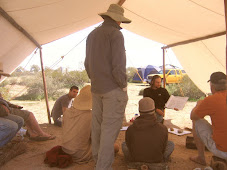
 I'm back in civilization after a week-long primitive skills gathering in Casa Grande, AZ. This event, called "Winter Count" after the tradition of yearly pictographic calenders kept by Plains natives, attracts survival skills enthusiasts, artists, musicians, modern day abos, environmental educators, back-to-the-land advocates, and other interesting groups who wish to learn the ways of the ancients. With such a hodgepodge of people engaging in timeless activities like fire-by-friction, basketry, cordage, trapping, bow-making, felting, animal processing, and living on the land, there is ample opportunity to network and gain tons of knowledge and inspiration.
This year was my 6th year attending since 2003 -- my second year as an instructor. As a student I learned the basics of wilderness living and now have a solid background in fire-making, edible wild plants, and survival. As an instructor, I've been presenting, refining and discussing my passion, which I call primitive nutrition. Other names for this subject might be nutritional/medical anthropology, paleolithic diet, or hunter-gatherer foodways. I thoroughly enjoyed discussing this broad and highly debated topic at Winter Count. Can't wait until next year!
Saturday, December 6, 2008
Doctor, please don't poo-poo the Paleo diet!
A friend of mine forwarded an article to me about the paleo diet a while ago. It's a question and answer session in Oprah Magazine with a doctor named David Katz, MD. The article is called, "Should We Eat a Paleolithic Diet?" and it's flawed in many ways. See for yourself:
http://www.oprah.com/article/omagazine/200812_omag_katz_paleolithic
After reading the first few paragraphs, it is very apparent that the author is one of these politically-correct nutrition gurus that never seems to make a solid stand on anything except what mainstream nutritionists and dieticians recommend. Certainly not a breath of fresh air from all of the unfounded dietary recommendations that inundate the media. Following are points brought up in the article by Katz, along with my response.
Quote: "However, many anthropologists prefer describing our ancestors as gatherer-hunters because about two-thirds of their diet was plant based."
You begin to see from this quote that he has strong bias towards a plant-based diet for maintaining health. Two-thirds is a huge stretch, in my opinion. Studies of modern hunter-gatherers conflict with this information. Loren Cordain, one of the foremost researchers on the Paleolithic diet, has very solid data showing HG's eating a meat-based diet. (However, like this Katz guy, Cordain sells out to politically correct nutrition, claiming that HG's ate very little saturated fat and cholesterol.)
A great resource for paleo diet information, based on anthropological research can be found by doing a search for HL Abrams. This dude is on par, in my opinion.
Quote: " The flesh of antelope, which paleontologists believe most resembles the flesh our Stone Age ancestors would have eaten, has a very low fat content, roughly 16 percent of total calories. Contrast that with beef, which can be 30 percent fat or higher. Even more important is the quality of the fat. "
Typical ignorant viewpoint from a man who has most likely never butchered an animal. Fatty portions of an animal that HG's used include: bone marrow, back fat, cavity fat, tongue, kidney fat, intestinal fat, brains, and -- in some cases, when boiling bones for long periods -- bone grease. The fatty acid composition of muscle meat is irrelevant because HG's didn't only eat muscle meat -- they ate the whole animal!
By the way, much of an antelope's fat is actually quite high in saturated fatty acids. Not to mention *gasp!* cholesterol!
Quote: "Meat from animals that graze on grass contains a much higher proportion of polyunsaturated fat, including those heart-healthy omega-3s."
Notice he says grass-fed "meat" contains a higher proportion of polyunsaturated fat. Again, he neglects to mention all of the fat from the rest of the animal, which are dominated by saturated and monounsaturated fatty acids. Not only that, but he is implying that polyunsaturates are the healthiest fats to consume. A big no-no, indeed, considering the studies done on test animals in which a high-polyunsaturated vegetable fat diet leads to death and disease. Also, factor in the lack of polyunsaturates in HG's diets when taking into account the entire animal.
Quote: "Our Stone Age ancestors lived to only about the age of 40—who knows how their health would have fared after 80 years of eating like this?"
Lifespan statistics are influenced by infant mortality rates, which were certainly higher before the advent of modern medicine due to environmental factors. For every set of bones from a paleo 80-year-old, an infant death -- being listed statistically as 0-years old -- will affect the average. The average of 80 and 0 is 40, correct? You can see how statisticians come to such silly conclusions. Also, factor in deaths from weapons and accidents. The fact is that there were elderly castes in many primitive cultures, such as the aborigines. I've heard anectodotal accounts from personal communications with modern Native American people claiming that their grandparents lived to be 100-years-old and beyond. I'm sure if I searched enough I could find some archaelogical evidence (dentition studies) of ancient peoples reaching such an age.
And, as for HGs health when they reach 80-years and beyond: if they still have all of their perfectly straight teeth and dense bones at 80, they're doing a hell of a lot better health-wise than us brace-face moderns. Ancient skulls would suggest that paleo people were optimally healthy (perfect teeth, fully-developed noggin) throughout their lives.
Quote: " The dietary plan I prefer to espouse is one supported by both anthropology and modern science: plenty of vegetables, fruits, and whole grains as a stand-in for the wild plants our ancestors ate, nuts and seeds, beans, seafood, lean meats, eggs, and low-fat or nonfat dairy."
Lord, have mercy! This guy isn't saying anything new -- just sticking to the same line of BS that we've been hearing since faulty, biased studies in the 50s and 60s "proved" that all disease is caused by fat and cholesterol. If this guy truly eats this way, he's got to be one hungry, fat-starved dude.
Our ancestors ate lean meat WITH FAT from all parts of the animal. Gathering plants is entirely impractical in many parts of the world. Hunting animals is the most energy-efficient way to attain nutrition in the wild (especially the all-important vitamins A & D from animal fats -- as documented by Weston Price -- and complete amino acids). We evolved on meat and fat with supplemental plants in season. And, in my opinion, this is what we are biologically suited for. Period.
http://www.oprah.com/article/omagazine/200812_omag_katz_paleolithic
After reading the first few paragraphs, it is very apparent that the author is one of these politically-correct nutrition gurus that never seems to make a solid stand on anything except what mainstream nutritionists and dieticians recommend. Certainly not a breath of fresh air from all of the unfounded dietary recommendations that inundate the media. Following are points brought up in the article by Katz, along with my response.
Quote: "However, many anthropologists prefer describing our ancestors as gatherer-hunters because about two-thirds of their diet was plant based."
You begin to see from this quote that he has strong bias towards a plant-based diet for maintaining health. Two-thirds is a huge stretch, in my opinion. Studies of modern hunter-gatherers conflict with this information. Loren Cordain, one of the foremost researchers on the Paleolithic diet, has very solid data showing HG's eating a meat-based diet. (However, like this Katz guy, Cordain sells out to politically correct nutrition, claiming that HG's ate very little saturated fat and cholesterol.)
A great resource for paleo diet information, based on anthropological research can be found by doing a search for HL Abrams. This dude is on par, in my opinion.
Quote: " The flesh of antelope, which paleontologists believe most resembles the flesh our Stone Age ancestors would have eaten, has a very low fat content, roughly 16 percent of total calories. Contrast that with beef, which can be 30 percent fat or higher. Even more important is the quality of the fat. "
Typical ignorant viewpoint from a man who has most likely never butchered an animal. Fatty portions of an animal that HG's used include: bone marrow, back fat, cavity fat, tongue, kidney fat, intestinal fat, brains, and -- in some cases, when boiling bones for long periods -- bone grease. The fatty acid composition of muscle meat is irrelevant because HG's didn't only eat muscle meat -- they ate the whole animal!
By the way, much of an antelope's fat is actually quite high in saturated fatty acids. Not to mention *gasp!* cholesterol!
Quote: "Meat from animals that graze on grass contains a much higher proportion of polyunsaturated fat, including those heart-healthy omega-3s."
Notice he says grass-fed "meat" contains a higher proportion of polyunsaturated fat. Again, he neglects to mention all of the fat from the rest of the animal, which are dominated by saturated and monounsaturated fatty acids. Not only that, but he is implying that polyunsaturates are the healthiest fats to consume. A big no-no, indeed, considering the studies done on test animals in which a high-polyunsaturated vegetable fat diet leads to death and disease. Also, factor in the lack of polyunsaturates in HG's diets when taking into account the entire animal.
Quote: "Our Stone Age ancestors lived to only about the age of 40—who knows how their health would have fared after 80 years of eating like this?"
Lifespan statistics are influenced by infant mortality rates, which were certainly higher before the advent of modern medicine due to environmental factors. For every set of bones from a paleo 80-year-old, an infant death -- being listed statistically as 0-years old -- will affect the average. The average of 80 and 0 is 40, correct? You can see how statisticians come to such silly conclusions. Also, factor in deaths from weapons and accidents. The fact is that there were elderly castes in many primitive cultures, such as the aborigines. I've heard anectodotal accounts from personal communications with modern Native American people claiming that their grandparents lived to be 100-years-old and beyond. I'm sure if I searched enough I could find some archaelogical evidence (dentition studies) of ancient peoples reaching such an age.
And, as for HGs health when they reach 80-years and beyond: if they still have all of their perfectly straight teeth and dense bones at 80, they're doing a hell of a lot better health-wise than us brace-face moderns. Ancient skulls would suggest that paleo people were optimally healthy (perfect teeth, fully-developed noggin) throughout their lives.
Quote: " The dietary plan I prefer to espouse is one supported by both anthropology and modern science: plenty of vegetables, fruits, and whole grains as a stand-in for the wild plants our ancestors ate, nuts and seeds, beans, seafood, lean meats, eggs, and low-fat or nonfat dairy."
Lord, have mercy! This guy isn't saying anything new -- just sticking to the same line of BS that we've been hearing since faulty, biased studies in the 50s and 60s "proved" that all disease is caused by fat and cholesterol. If this guy truly eats this way, he's got to be one hungry, fat-starved dude.
Our ancestors ate lean meat WITH FAT from all parts of the animal. Gathering plants is entirely impractical in many parts of the world. Hunting animals is the most energy-efficient way to attain nutrition in the wild (especially the all-important vitamins A & D from animal fats -- as documented by Weston Price -- and complete amino acids). We evolved on meat and fat with supplemental plants in season. And, in my opinion, this is what we are biologically suited for. Period.
Subscribe to:
Posts (Atom)

 Posts
Posts

