Showing posts with label anthropology. Show all posts
Showing posts with label anthropology. Show all posts
Monday, March 1, 2010
Wintercount Rendezvous 2010
After going shirtless and stocking up my vitamin D reserves in the Sonoran Desert at the Wintercount Rendezvous, I'm back to blogging and am pretty excited to share some of the experiences I've had over the last few weeks. I bought a digital video camera just before attending the gathering in order to document some of my Primitive Nutrition classes, as well as an interview or two. Now I'm learning how to edit the footage and soon will have some of these videos to share here on my blog. For now, I thought I'd provide a glimpse into what I've been up to lately -- particularly for all you curious folks out there who might be asking yourselves, "Just what in the heck in this 'Wintercount' thing this guy mentions so often?" Enjoy!

Tuesday, January 19, 2010
Small Game in Primitive Living, Part 3: Cooking For Maximum Nutrients
Indigenous peoples all over the world applied universal cooking practices to their animal foods for optimum nutrition. For larger game, a common practice was to consume nutritious organ meats -- liver, kidneys, heart, etc. -- in addition to muscle flesh and fat after roasting over the fire, boiling in stews, or burying in pits lined with hot rocks. The full spectrum of amino acids, water-soluble and fat-soluble vitamins exist in these parts of the animal. For minerals, bones were added to long-cooked broths or cracked open to extract the rich, creamy marrow inside. Smaller bones were sometimes gnawed on; the flavorful juices perhaps provided a dose of calcium and gelatin, similar to the nutrients found in bone broths. The Townsend Newsletter For Doctors and Patients (2005) published an article about the properties of traditional bone broths and had this to say about nutritional content:
Broth can be thought of as a protein supplement, and a calcium supplement. The chemical ingredients extracted from broth are glycine and proline (collagen/gelatin), calcium and phosphorus (minerals), hyaluronic acid and chondroitin sulfate (GAGs), and other minerals, amino acids and GAGs in smaller amounts.
 If my memory serves me correctly, I once read an anthropological account of a few hundred years ago in which one Native American tribe always had a pot of broth on the fire and added scraps and bones to this pot continuously. The observer of this practice states that this tribe drank "copious" amounts of the broth.
Aside from the boiling of bones to release their minerals and nutritive elements, some tribes went to great lengths to supply yet another source of fat -- in addition to marrow and body fat deposits -- called "bone grease." This type of fat was attained by the long boiling of smashed bone and skimming the resultant grease off the surface. In a book called Imagining Head-Smashed-In: Aboriginal Buffalo Hunting on the Northern Plains, author Jack Brink goes into incredible detail about the production of bone grease, even going so far as to reproduce indigenous boiling techniques by adding hot, fire-heated rocks to buffalo hide containers filled with water. He explains how bone grease is different than marrow:
Though bone looks to be solid, it is really more of a latticework of twisted strands of bone tissue interspersed with tiny spaces ... The tiny spaces ... aren't empty; they are filled with small globules of fat. Called bone grease, it is a fat separate from the marrow in that is located in the bone structure itself, not the marrow cavity. (p. 190)
Another universal practice among primitive cultures is the use of blood. In a class I took at Wintercount one year, called "Using the Whole Animal," we caught the blood of a freshly slaughtered goat in a bucket and consumed the thick, scarlet red liquid after cooking it in a frying pan over a fire. It resembled ground meat and tasted very rich and satisfying. Of course, many of us know of the Masai and their practice of drinking raw, fresh blood -- so cooking isn't a requirement. Blood is a good source of electrolytes, especially sodium, which are sometimes hard to come by in primitive living. It is also high in protein and, in and of itself, a very sustaining food.
Powdered Woodrat
Now that we've reviewed some of the primitive cooking and eating practices for larger animals, let's examine how this information relates to the main subject of this series: small game. While it goes without saying that all of the nutrients present in large game are also present in smaller game, the difference in cooking techniques to maximize these nutrients requires some explanation. The cooking of small game is perhaps a simpler, more effective means of maximizing nutrition in primitive living due to the simple fact that long boiling times and extensive processing and butchering is not required. In fact, many small animals can be eaten whole, bones and all (of course, removing the intestines is a probably good idea in any case).
 Author Paul Campbell, who I've met at several primitive skills gatherings, documents the traditional hunt and preparation of white-throated woodrat in his book, Survival Skills of Native California
 (pp. 340-345). A Kiliwa Indian named Sam Ochurte leads Campbell on the hunt and, after procuring a few woodrats by way of bow and arrow, the native builds a small fire to cook his quarry. He then singes the hair off, cooks the skin to a crisp, bacon-like consistency and removes the charred pieces of skin, eating each with a pinch of salt. Ochurte then removes the intestines from the woodrats and returns them to the coals to finish cooking. When thoroughly cooked, the whole rats are set upon one rock and pounded with another, as in a mano and metate setup, until they are a small pile of shredded meat and crushed bone. He then picks out any uncrushed fragments and the rest -- smashed up bones, teeth, meat, and organs -- he eats. As Campbell acknowledges, "The nutritional value of even one complete rodent must have been considerable."
Campbell notes that similar processing techniques were observed historically in several other California tribes. Rabbits, hares, squirrels, and other small game were prepared this way. In addition to this, larger game bones, such as deer vertebrae, were also pounded and stored or eaten -- ancient calcium supplements in a sense. He describes other cooking methods for small game, including the boiling of whole small animals -- taken out temporarily to remove the skin similar to the above account -- and eaten whole, guts and all.
By using the whole animal, primitive peoples easily attained the nutrition required for optimal health, and modern abos would be wise to follow suit in primitive living excursions and experiments if they are to sustain their health and maximize nutrients to thrive in the wilderness.
Broth can be thought of as a protein supplement, and a calcium supplement. The chemical ingredients extracted from broth are glycine and proline (collagen/gelatin), calcium and phosphorus (minerals), hyaluronic acid and chondroitin sulfate (GAGs), and other minerals, amino acids and GAGs in smaller amounts.
If my memory serves me correctly, I once read an anthropological account of a few hundred years ago in which one Native American tribe always had a pot of broth on the fire and added scraps and bones to this pot continuously. The observer of this practice states that this tribe drank "copious" amounts of the broth. Aside from the boiling of bones to release their minerals and nutritive elements, some tribes went to great lengths to supply yet another source of fat -- in addition to marrow and body fat deposits -- called "bone grease." This type of fat was attained by the long boiling of smashed bone and skimming the resultant grease off the surface. In a book called Imagining Head-Smashed-In: Aboriginal Buffalo Hunting on the Northern Plains, author Jack Brink goes into incredible detail about the production of bone grease, even going so far as to reproduce indigenous boiling techniques by adding hot, fire-heated rocks to buffalo hide containers filled with water. He explains how bone grease is different than marrow:
Though bone looks to be solid, it is really more of a latticework of twisted strands of bone tissue interspersed with tiny spaces ... The tiny spaces ... aren't empty; they are filled with small globules of fat. Called bone grease, it is a fat separate from the marrow in that is located in the bone structure itself, not the marrow cavity. (p. 190)
Another universal practice among primitive cultures is the use of blood. In a class I took at Wintercount one year, called "Using the Whole Animal," we caught the blood of a freshly slaughtered goat in a bucket and consumed the thick, scarlet red liquid after cooking it in a frying pan over a fire. It resembled ground meat and tasted very rich and satisfying. Of course, many of us know of the Masai and their practice of drinking raw, fresh blood -- so cooking isn't a requirement. Blood is a good source of electrolytes, especially sodium, which are sometimes hard to come by in primitive living. It is also high in protein and, in and of itself, a very sustaining food.
Powdered Woodrat
Now that we've reviewed some of the primitive cooking and eating practices for larger animals, let's examine how this information relates to the main subject of this series: small game. While it goes without saying that all of the nutrients present in large game are also present in smaller game, the difference in cooking techniques to maximize these nutrients requires some explanation. The cooking of small game is perhaps a simpler, more effective means of maximizing nutrition in primitive living due to the simple fact that long boiling times and extensive processing and butchering is not required. In fact, many small animals can be eaten whole, bones and all (of course, removing the intestines is a probably good idea in any case).
Author Paul Campbell, who I've met at several primitive skills gatherings, documents the traditional hunt and preparation of white-throated woodrat in his book, Survival Skills of Native California (pp. 340-345). A Kiliwa Indian named Sam Ochurte leads Campbell on the hunt and, after procuring a few woodrats by way of bow and arrow, the native builds a small fire to cook his quarry. He then singes the hair off, cooks the skin to a crisp, bacon-like consistency and removes the charred pieces of skin, eating each with a pinch of salt. Ochurte then removes the intestines from the woodrats and returns them to the coals to finish cooking. When thoroughly cooked, the whole rats are set upon one rock and pounded with another, as in a mano and metate setup, until they are a small pile of shredded meat and crushed bone. He then picks out any uncrushed fragments and the rest -- smashed up bones, teeth, meat, and organs -- he eats. As Campbell acknowledges, "The nutritional value of even one complete rodent must have been considerable."Campbell notes that similar processing techniques were observed historically in several other California tribes. Rabbits, hares, squirrels, and other small game were prepared this way. In addition to this, larger game bones, such as deer vertebrae, were also pounded and stored or eaten -- ancient calcium supplements in a sense. He describes other cooking methods for small game, including the boiling of whole small animals -- taken out temporarily to remove the skin similar to the above account -- and eaten whole, guts and all.
By using the whole animal, primitive peoples easily attained the nutrition required for optimal health, and modern abos would be wise to follow suit in primitive living excursions and experiments if they are to sustain their health and maximize nutrients to thrive in the wilderness.
Wednesday, January 13, 2010
Small Game in Primitive Living, Part 2: Protein, Fat, & Calories
Without a doubt, the procuring of adequate food while in a primitive living situation is one of the most consuming (pun unintended) tasks that any modern abo-wannabe participates in. After several days in the backcountry with a group of fellow primitive living enthusiasts, food fantasies inevitably come up. "Oh, man, it'd be so great if we came across a pizza smothered in cheese, topped with pepperonis and meat. " Sometimes these food fantasies take on a spirit of their own and the resultant food combinations are often dishes that no normal, well-fed human being would enjoy (or even think of, really) in civilization. I once heard a guy say, "I had a dream last night that I was gorging on Church's Chicken topped with ice cream and chocolate syrup." Mmm ... fried chicken and Ben & Jerry's in one glorious conglomeration.
What does it take to keep a person satisfied in the wilderness when he or she is living on the land, solely utilizing what is in nature to fill his or her belly? Is it possible to live primitively, happily, with a full stomach while keeping the food fantasies at bay? First and foremost, it depends on the environment in which one is attempting to get fed. Many natural areas in the world are sorely lacking in many of the abundant plants and animals that used to flourish only a few hundred years ago. In the Sonoran Desert, for example -- my stomping grounds -- wild antelope, grazing on extensive, lush grasslands, used to be a common sight. Now, in most areas where the antelopes once roamed and the grass once grew, there remains scrubby, sad-looking mesquite trees, strangling the land and creating an impermeable barrier of interlaced thorny branches. Along with over-hunting and over-population, this is a direct effect of over-grazing cattle on lands where they never ranged historically.
 Human beings have left a profound mark upon the earth, and this leaves folks who want to recreate a primitive living experience with limited resources. What modern abos are left with is but a miniscule piece of nature's pie. "The old gray mare, she ain't what she used to be." And, unless we go to Alaska or other relatively unspoiled places, we cannot simply walk out into our backyards and find dinner. Or can we?
A question I've pondered often is whether or not human beings can live comfortably and successfully with what is available in these altered natural places -- can we work with the limited resources available? While the abundance of large game animals and wild plant foods in most places -- especially deserts -- has dwindled, perhaps there remains an underestimated, underutilized opportunity for sustenance in small game animals, whose populations have remained relatively stable over time. Can squirrels, rabbits, birds, mice, and other tiny creatures provide all that a person needs to live well in the wild or elsewhere?
Matt Graham's experience suggests that it is indeed possible to meet at least one person's caloric and nutritional needs on such fare. By setting traplines of two simple traps -- one being a spring snare and the other being a Paiute figure-four deadfall -- checking them every day, and cooking the caught animals (mostly squirrels and rabbits) for optimum calories and nutrition, Matt was able to provide for himself during his three months of full-on primitive living in the southern Utah desert. However, over those three months, he also ended up slowly losing body mass, indicating inadequate caloric intake over time. Just how many squirrels and rabbits was he eating day to day? If he had attained more, would he have felt more satisfied and maintained a better body composition? And what quantity of small game would that require? I hope to discuss some of these questions with Matt at Wintercount. Until then, I thought it would be interesting to speculate a little.
Using the data from a research paper (intended for the evaluation of predators' diets in zoos) called "Nutrient Composition of Whole Prey (Excluding Fish) Fed in Zoos" -- and a lot of help from Stephan at Whole Health Source -- I was able to make some calculations and come up with the protein, fat, and calorie content of a few small game animals per pound of whole carcass (note: some animals are eviscerated, meaning their hides and internal organs are discarded):

Here we see that, while a pound of each animal provides adequate protein, when it comes to fat and overall calories, any person would be feeling pretty darn hungry after a while on such a dietary regimen. Aside from that, there's also the reality of just how many successful traps one can set in a day and just how many animals such traps can provide. Let's say we want a minimum of about 1500 calories per day, give or take. That would require roughly:
**Similar in weight to Gambel's Quail of the Sonoran Desert
If we want to have enough calories to maintain body mass and even build muscle in primitive living, it would require twice those numbers. Realistically, no person is going to be able to procure the amount of mice it requires to sustain a person in this way. I certainly wouldn't be up for setting the number of traps that it would take, considering the fact that one whole mouse is only one bite and down the hatch! However, when we look at some of the larger animals, surviving comfortably in the wild becomes more than a pipe dream. Catch a few squirrels, maybe some mice and quail, and a rabbit or two per day and you have the makings of a successful primitive living experience! The question of fat, however, is inescapable, and may require the taking of some animals soley for the fatty parts, which would add on a few more squirrels or one more rabbit to account for this need (if we are to achieve an ideal 60/40 or, best, 80/20 ratio of protein to fat).
Of course, not all of the animal can be eaten in most cases (aside from the very tiny ones) so we are left with the question of just how much of each animal can, in fact, be digested and utilized for nutrients. In the next post, we'll discuss cooking small game in primitive living.
Note: I realize I'm leaving out the addition of plant foods to the primitive diet and their caloric contribution. Seasonal variation and environmental degradation, not to mention the extensive processing many wild edibles require, makes them a questionable food source for practicing abos in many parts of the world. If they're abundant, though, definitely eat 'em!
What does it take to keep a person satisfied in the wilderness when he or she is living on the land, solely utilizing what is in nature to fill his or her belly? Is it possible to live primitively, happily, with a full stomach while keeping the food fantasies at bay? First and foremost, it depends on the environment in which one is attempting to get fed. Many natural areas in the world are sorely lacking in many of the abundant plants and animals that used to flourish only a few hundred years ago. In the Sonoran Desert, for example -- my stomping grounds -- wild antelope, grazing on extensive, lush grasslands, used to be a common sight. Now, in most areas where the antelopes once roamed and the grass once grew, there remains scrubby, sad-looking mesquite trees, strangling the land and creating an impermeable barrier of interlaced thorny branches. Along with over-hunting and over-population, this is a direct effect of over-grazing cattle on lands where they never ranged historically.
 Human beings have left a profound mark upon the earth, and this leaves folks who want to recreate a primitive living experience with limited resources. What modern abos are left with is but a miniscule piece of nature's pie. "The old gray mare, she ain't what she used to be." And, unless we go to Alaska or other relatively unspoiled places, we cannot simply walk out into our backyards and find dinner. Or can we?
Matt Graham's experience suggests that it is indeed possible to meet at least one person's caloric and nutritional needs on such fare. By setting traplines of two simple traps -- one being a spring snare and the other being a Paiute figure-four deadfall -- checking them every day, and cooking the caught animals (mostly squirrels and rabbits) for optimum calories and nutrition, Matt was able to provide for himself during his three months of full-on primitive living in the southern Utah desert. However, over those three months, he also ended up slowly losing body mass, indicating inadequate caloric intake over time. Just how many squirrels and rabbits was he eating day to day? If he had attained more, would he have felt more satisfied and maintained a better body composition? And what quantity of small game would that require? I hope to discuss some of these questions with Matt at Wintercount. Until then, I thought it would be interesting to speculate a little.
Using the data from a research paper (intended for the evaluation of predators' diets in zoos) called "Nutrient Composition of Whole Prey (Excluding Fish) Fed in Zoos" -- and a lot of help from Stephan at Whole Health Source -- I was able to make some calculations and come up with the protein, fat, and calorie content of a few small game animals per pound of whole carcass (note: some animals are eviscerated, meaning their hides and internal organs are discarded):

Here we see that, while a pound of each animal provides adequate protein, when it comes to fat and overall calories, any person would be feeling pretty darn hungry after a while on such a dietary regimen. Aside from that, there's also the reality of just how many successful traps one can set in a day and just how many animals such traps can provide. Let's say we want a minimum of about 1500 calories per day, give or take. That would require roughly:
- 56 adult mice (avg. 20 grams each)
- 2 gray squirrels (avg. 1.1 lbs each)
- 1/3 of an eviscerated domestic rabbit (avg. 9 lbs each)*
- 1/2 of an eviscerated black-tailed jackrabbit (avg. 8 lbs. each)
- 6 Japanese quail (avg. 1/3 lb each)**
**Similar in weight to Gambel's Quail of the Sonoran Desert
If we want to have enough calories to maintain body mass and even build muscle in primitive living, it would require twice those numbers. Realistically, no person is going to be able to procure the amount of mice it requires to sustain a person in this way. I certainly wouldn't be up for setting the number of traps that it would take, considering the fact that one whole mouse is only one bite and down the hatch! However, when we look at some of the larger animals, surviving comfortably in the wild becomes more than a pipe dream. Catch a few squirrels, maybe some mice and quail, and a rabbit or two per day and you have the makings of a successful primitive living experience! The question of fat, however, is inescapable, and may require the taking of some animals soley for the fatty parts, which would add on a few more squirrels or one more rabbit to account for this need (if we are to achieve an ideal 60/40 or, best, 80/20 ratio of protein to fat).
Of course, not all of the animal can be eaten in most cases (aside from the very tiny ones) so we are left with the question of just how much of each animal can, in fact, be digested and utilized for nutrients. In the next post, we'll discuss cooking small game in primitive living.
Note: I realize I'm leaving out the addition of plant foods to the primitive diet and their caloric contribution. Seasonal variation and environmental degradation, not to mention the extensive processing many wild edibles require, makes them a questionable food source for practicing abos in many parts of the world. If they're abundant, though, definitely eat 'em!
Monday, January 11, 2010
Small Game in Primitive Living, Sidebar: Awareness
Our pre-neolithic ancestors were able to achieve the feat of thriving in the wild -- seemingly impossible in the eyes of modern folks -- without a hitch. Why they were able to do this is simple: they knew the patterns; they knew where the food was; and they knew the ingenious methods to put a roast on the spit. In short: they knew the land.
So, before we get into the specifics of attaining adequate food in the wild -- calories and nutrients -- let's first acknowledge a very important primitive living skill that any modern-day abo should have in his or her repertoire: awareness. This means awareness of, not only skills, but also the place where these skills are being practiced. It goes without saying that knowledge of plants, animals, and seasonal variations in any given environment is a huge advantage in primitive living. Where's the water? Where's the food? Where's the hazards? Knowing these things is important. In addition to these things, an abo would be wise to have a keen sense of personal needs. This means asking questions, such as: What does true hunger feel like? When am I strongest? When am I weakest? Am I thirsty? Am I tired? It sounds easy enough, but, in my experience, this self-awareness was sorely lacking until I had plenty of "dirt-time."

To sum it up, awareness in primitive living can be thought of as a sense of one's own needs and how to meet them with the resources available. When we observe indigenous people in their environment -- their element -- it's readily apparent that they are very comfortable and content. They know themselves. They know their place. They are satisfied. With practice, we moderns can achieve a similar comfort and satisfaction in primitive living. In the world of health and nutrition, we cannot go back to the vibrancy in physical being of our ancestors. Similarly, in primitive living, we'll never be as skilled as Ishi, Last of the Yahi , but we can come close. I've met many people who have attained awareness, skills, and, most telling of all, comfort in the wilds. It can be done.
, but we can come close. I've met many people who have attained awareness, skills, and, most telling of all, comfort in the wilds. It can be done.For a great resource on increasing your own personal awareness and nature skills, I highly recommend the Kamana Naturalist Training Program created by Wilderness Awareness School. For absolutely amazing dirt-time experience, check out the Boulder Outdoor Survival School. Also, primitive living skills can be learned hands-on at an affordable price at any of a number of skills gatherings across the country, the big two being Wintercount and Rabbitstick. By combining awareness and skills, primitive living enthusiasts can become "whole" in nature and truly feel at home.
Small Game in Primitive Living, Part 2 -- in which I'll delve into the calories and nutrients of whole animals and cooking methods to get the most out of your small game quarry -- is coming soon ...
Saturday, January 2, 2010
Video Footage of Weston A. Price
I'm currently working on crunching some numbers to put together part two of the "Small Game in Primitive Living" series and will hopefully finish it soon. Until then, I thought I'd post this video I came across on YouTube the other day. It's a segment from an odd, somewhat dated television show -- public access, I'm guessing -- called "Homekeepers." The host is interviewing a woman -- a "Certified Nutritional Consultant" -- who describes the findings of Weston Price. I'm not sure who this woman is or what she's all about (besides the fact that she's very politically correct when it comes to nutrition) but I'm very grateful that she dug up some fascinating video footage of Price. If you want to skip the interview (which I would recommend) and go straight to the press release footage of Price, fast-forward to 3:26.
Friday, December 11, 2009
Small Game in Primitive Living, Part 1: The Paiute Deadfall
Some of you may recall the post I wrote on Matt Graham, called "Talking Nutrition with a Wild Man," in which I describe his 6-month primitive living experience and explain how he attained adequate nutritional support in the wilderness of southern Utah. Most of what he ate consisted of small game: mice, squirrels, rabbits. What I didn't get into was the methods Matt utilized to capture these animals and the specific nutrients and calories that they supplied him with. In this post I'll describe one of the methods he used -- my friend and yours, the figure-four Paiute deadfall. In a later post, we'll dive deeper into the nutrional contents and caloric contribution of small game commonly caught by such a trap.
 Yup, that's it. A few sticks and some cordage with a "toggle" piece attached. The sticks, made from pine, can be fashioned out of any sturdy type of wood. The uppermost stick in the photo -- the top-piece -- has cordage tied on and a notch carved into it for reasons you'll understand in a little bit. The other stick -- the foundation piece -- is carved to a flat point to fit nicely into the top-piece's notch; it's two stubby "legs" give it more stability when setting the trap. The cordage is made from artificial sinew, but any strong natural fibers will do. When I lived in the Sonoran desert, I was a big fan of yucca and agave fibers. I'll leave natural cordage-making skills for another time, though.

 You'll notice that, to complete the trap, I had to (1) find a rock with a nice flat bottom and wide base and (2) attain a long, thin bait stick to thread underneath the rock. Obviously, if I was actually setting this trap to procure an animal, I'd have speared some bait onto the bait stick before setting, such as local wild plants that a small animal might like -- maybe pinyon pine nuts, seed heads of various grasses -- or food I might have with me as trail snacks, such as raisins or peanut butter. Mice seem to really love raisins. Although no rodents came along after I set it, to my good fortune (and perhaps to the benefit of the more squeamish readers of this blog), this particular trap attracted a wild desert tangerine!
 Notice the rocks I stacked on top of the main rock after setting the trap. This increases the weight and, thus, crushing force and speed of the deadfall. It also allows me to evaluate the stability of the trap. Now let's trigger the trap, lift the rock, and see what happens to the unsuspecting tangerine:
 Ouch! As you can see, when the bait stick is tugged at or nudged in any way, the trap is triggered and the rock falls abrubtly, leaving very little time for the animal (or, in this case, fruit) to escape. The main components of the Paiute deadfall spring neatly into the air and out of the way of the rock, allowing the rock to lay perfectly flesh with the ground (or, ideally, a hard, flat rock underneath) -- only the thin bait stick, along with the bait, actually receives the impact. The unlucky creature who happened to trigger the trap is instantly crushed to death. Squish! Mouse pancakes!
Mouse Pancakes and Squirrel Flapjacks
When I was 19-years-old, I learned how to make my first trap from my long-time mentor and friend, Vince Pinto (who now owns and operates Raven's Way Wild Journeys). It was a simple little contraption. Two sticks, each around six inches long and some agave fiber cordage made for the basis of a trap that I would use to procure many rodents in many primitive living trips in the years that followed. Named the figure-four Paiute deadfall after the very crafty, very omnivorious Northern Paiute natives who apparently pioneered it, this ingenious trap is hailed by modern-day abos everywhere as a reliable way to provide food in the bush. Matt Graham certainly endorses it. In fact, on his primitive trip, Matt only used two traps to supply his meat quarry: the Paiute deadfall and a spring snare. Knowing how to set a few traps really well, in his opinion, is better than knowing how to set many types of traps poorly. Quality not quantity.
Taking into consideration all the Paiute deadfalls I've set over the years, I'd say that this trap has squashed a mouse or a squirrel 50% of the time. Set six traps, get three little critters in my stomach. Matt and other masters of this trap with plenty of "dirt time" in the wilderness probably have a much higher success rate due to intimate knowledge of their regions as well as years of refinement and experimentation.
The Paiute deadfall components, in all its glory (aside from the rock needed to set it), is pictured below:
Yup, that's it. A few sticks and some cordage with a "toggle" piece attached. The sticks, made from pine, can be fashioned out of any sturdy type of wood. The uppermost stick in the photo -- the top-piece -- has cordage tied on and a notch carved into it for reasons you'll understand in a little bit. The other stick -- the foundation piece -- is carved to a flat point to fit nicely into the top-piece's notch; it's two stubby "legs" give it more stability when setting the trap. The cordage is made from artificial sinew, but any strong natural fibers will do. When I lived in the Sonoran desert, I was a big fan of yucca and agave fibers. I'll leave natural cordage-making skills for another time, though.The dimensions pictured are by no means the only way to go about making this trap, but they seem to work well for me. All of the fancy carvings on the sticks aren't really neccesary, but I find them helpful in allowing me to adjust the length of cord on-the-fly by wrapping it around the top-piece, as well as securing the cord better on the bottom foundation piece. Below is what the trap looks like once it's set (here, you can see more clearly how I used the carvings):
You'll notice that, to complete the trap, I had to (1) find a rock with a nice flat bottom and wide base and (2) attain a long, thin bait stick to thread underneath the rock. Obviously, if I was actually setting this trap to procure an animal, I'd have speared some bait onto the bait stick before setting, such as local wild plants that a small animal might like -- maybe pinyon pine nuts, seed heads of various grasses -- or food I might have with me as trail snacks, such as raisins or peanut butter. Mice seem to really love raisins. Although no rodents came along after I set it, to my good fortune (and perhaps to the benefit of the more squeamish readers of this blog), this particular trap attracted a wild desert tangerine!Notice the rocks I stacked on top of the main rock after setting the trap. This increases the weight and, thus, crushing force and speed of the deadfall. It also allows me to evaluate the stability of the trap. Now let's trigger the trap, lift the rock, and see what happens to the unsuspecting tangerine:Ouch! As you can see, when the bait stick is tugged at or nudged in any way, the trap is triggered and the rock falls abrubtly, leaving very little time for the animal (or, in this case, fruit) to escape. The main components of the Paiute deadfall spring neatly into the air and out of the way of the rock, allowing the rock to lay perfectly flesh with the ground (or, ideally, a hard, flat rock underneath) -- only the thin bait stick, along with the bait, actually receives the impact. The unlucky creature who happened to trigger the trap is instantly crushed to death. Squish! Mouse pancakes!More Resources For the Paiute Deadfall
For brevity's sake, I'm going to leave a more detailed discussion of this trap to Jim Riggs, one of the great influences of the primitive skills movement and a man with a lot of "dirt time." His article "Rocking On with the Paiute Deadfall" is by far the most thorough and well-written piece I have seen on this subject. Those of you out there in cyberland who want to experiment with a Paiute deadfall will benefit greatly from Mr. Riggs' description of the trap.
Also, a very good explanation of the Paiute deadfall is given in this video. I've never met the man who made this tutorial (Mark Lummio of Bushcraft Northwest), but he seems to really know what he's talking about. Absolutely fantastic video.
In the next post, I'll get into the nutritional and caloric details of small game animals that a person might find underneath his or her deadfall rocks day to day; and I'll evaluate the realities inherent in living off of such fare as Matt Graham did: processing, cooking, and eating trapped animals to thrive -- not just survive -- in the wilderness primitively.
Thanks to my good pal, Jeff Macdonald, for helping with the pictures.
Wednesday, October 28, 2009
Tribal Fattening Practices
 While in America "thin is in," in some cultures around the world "fat is where it's at." One such culture can be found in the desert-streaked country of Mauritania, located in West Africa. Here, the true marker of beauty and health in a woman is the amount of rolls she has. But there's one problem: human beings eating normal amounts of natural foods don't get obese and overweight, and the common foods available in West Africa include raw goat's milk, meat, millet, couscous, dates, peanuts, and other whole foods. While most of us in the Western world can easily become fat through years of eating fattening, unnatural, metabolism-altering foods like high-fructose corn syrup, trans-fats, and high-gluten white flour, the Mauritanian people don't have such "luxuries" -- so they resort to good old-fashioned force-feeding to accomplish the task.
The Mauritanian fattening practice, called leblouh, takes place when young women enter a tiny sandstone hut. Inside resides an old woman, the "fattener," whose primary job in the community is to make sure these young women (sometimes beginning as young as 5-years-old) become plump and, thus, attractive and suitable for marraige.
Obvious moral and ethical implications of this practice aside, I thought it would be interesting to find out just how much food is utilized to accomplish the fattening. I was surprised to find out that these women typically are force-fed -- to the point of nasuea and vomiting at times -- a whole-foods diet of up to 16,000 calories. This includes four meals per day of:
...crushed dates and peanuts with couscous and oil ... cloying, egg-size balls of around 300 calories apiece. Each girl eats about 40 per day, along with 12 pints of goat's milk and gruel ... (Source)
To bolster the fattening process, the women also must not get any exercise whatsoever, remaining in the huts for several years until they are married off. Additionally, because the task of eating such inordinate amounts of food is so physically challenging to the young women, the old woman "fattener" threatens to beat them if they refuse to eat.
Because the Mauritanian women are limited to traditional foods, which lead to satiety rather quickly due to high nutrient content and are difficult to overeat, some have sought out methods to increase their appetite unnaturally to be able to gain those extra pounds of beauty. One such method is the purchase of certain pharmaceuticals:
Sold secretly at city markets, they include hormones used to fatten camels and chickens, and steroids for asthma and cancer ... (Source)
The difficulty inherent in these traditional peoples' ability to gain weight while eating whole foods challenges the notion, once again, that carbohydrates lead to obesity. Here we have a culture whose only way of fattening young women is by force-feeding them massive amounts of proteins, carbohydrates, and fats. If to fatten the young women it was only necessary to emphasize carbohydrates in the diet, as Gary Taubes and other low-carb proponents might suggest, then why must the women be forced to eat excessive amounts food to become overweight? Why not just eat millet and couscous and dates? Many modernized folks seem to have no trouble at all gaining unneeded weight while eating far less than 16,000 calories. Yet these Mauritanian women must resort to appetite increasing drugs or the threat of a beating while eating about that much food to do the same:
Although hardly skeletal at 5'6" and 180 pounds, Hawer [a 26-year-old Mauritanian woman] says she has trouble piling on weight, and was teased by plumper girls as a teenager. Recently, her husband told her that he "didn't like sleeping with a bag of bones. Desperate to be bigger, Hawer uses drugs to aid weight gain." (Source)
It's the quality of food that's the difference. Traditional versus modern food. High-fructose corn syrup, one the great fatteners in the indutrialized nations, would be a prized commodity in Mauritania.
One other interesting observation is that the older women in the culture, who have already gone through the fattening process during their younger years and have resumed eating a normal amount of traditional foods, appear to be at a healthy weight. Did they diet to lose their weight? I doubt it. Below is a picture of women who are campaigning against the practice of leblouh. All have gone through the leblouh in their youth, and none of them remain overweight:

Sunday, October 4, 2009
The People of the Deer
 Lately I've been enjoying an anthropological narrative called People of the Deer
 by Farley Mowat -- the famed and tenacious environmentalist, humanitarian, and defender of true scientific inquiry. In this colorful true-story adventure, first published in 1952, Mowat finds himself drawn, as he so often does, to a place far away in the middle of nowhere in the deep northern territories of Canada. It is here that he befriends and lives among an Eskimo group called the Ilhalmiut and begins to understand how modern encroachment -- namely fur-trapping and government policy -- is negatively affecting the native peoples' ability to live in a place where their ancestors had thrived for thousands of years before them. Mowat writes, quite bluntly, in the foreward of the 1975 edition of the book: "Genocide can be practiced in a variety of ways." Similar to Weston Price, he is not hesitant to place blame on Western culture for the decimation and struggle of the traditional peoples with whom he became intimately acquainted. From the foreword:
We have long prided ourselves on being a democratic nation, dedicated to the altar of freedom. Freedom for whom? If it is only freedom for ourselves to do as we please at the expense of others, then our pious stance is even more abhorrent than that of any overt tyrant -- for ours is based on a vile hypocrisy.
Fat and Deer Hairs
While the book contains many fascinating tidbits, among the most intriguing are Mowat's detailed descriptions of the traditional Ilhalmiut diet and their shifting health as a result of Western influence. When he first arrives at the small settlement of Ilhalmiut, the author is welcomed with a tray of meat that might make any Westerner's stomach churn:
Half a dozen parboiled legs of deer were spread out in a thick gravy which seemed to be composed of equal parts of fat and deer hairs. Bobbing about in the debris were a dozen tongues and, like a cage holding the lesser cuts of meats, there was an entire rib basket of a deer.
Still hungry? There's more!
There were side dishes too ... a skin sack, full of flakes of dry meat ... a smoking bundle of marrow bones ... neatly cracked to so that we would have no trouble extracting the succulent marrow. (p. 82)
Yum.
The cooking varied somewhat, but the food did not. The rule was meat at every meal and nothing else but meat, unless you could count a few well-rotted duck eggs which served as appetizers. To satisfy my curiousity I tried to estimate the quantity of meat Hekwaw [a member of the tribe] put away each day. I discovered he could handle ten to fifteen pounds when he was really hungry... (p. 85)
It doesn't take Mowat long to identify the key ingredient of the Ilhalmiut diet: fat. From his own experience on lean meat for an extended period of time, he describes the vast importance of fat in an all-meat diet through his battle with an affliction which he names, for want of a better term, mal de caribou, also known by a great many arctic explorers, prisoners of war, and human carnivores as rabbit starvation:
... persistent diarrhea was only part of the effect of mal de caribou. I was [also] filled with a sick lassitude, an increasing loss of will to work that made me quite useless ...
Mowat's guide -- a half-Eskimo, half-white man named Franz -- prepared and administered a peculiar remedy:
... he took out a half-pound of precious lard, melted it in a frying pan, and, when it was lukewarm and not yet congealed, he ordered me to drink it. Strangely, I was greedy for it ... I drank a lot of it, then went to bed; and by morning I was completely recovered ... I was suffering from a deficiency of fat and did not realize it. (p. 88)
Death and Disease Among the Ilhalmiut
Concerning the health of the Ilhalmiut people, Mowat goes into extensive historic, anecdotal, and statistical detail while attempting to get at the root of the Northern natives' plight of disease and illness following the arrival of Western culture. It's no secret to those who have studied into the writings and theories of nutritional heroes such as Weston Price, Sir Robert McCarrison, T.L. Cleave, and others that when modern foods such as white flour and sugar are introduced to a traditional culture ill health follows, worsening from generation to generation. Farley Mowat joins the ranks of these great independent thinkers when he waxes sensible, explaining his own theory as to why the people of the far North and other native peoples in history have succumbed to tuberculosis, measles, and small pox:
Perhaps you have heard of the decimation of the forest Indians brought about by disease, by lack of adaptability, by inherent laziness and indolence or by other causes ... you have never heard the truth, for all of these apparent causes are manifestions of the real destroyer, which is -- starvation. If you ask about the thousands of Indians and Eskimos who die each year of tuberculosis, if you ask about the measles and smallpox epidemics which ... have destroyed over one-tenth of the Northern natives ... these people too die of starvation ... (p.91)
Is it just me, or is Mr. Mowat on to something here? He goes on to tell the story of an Inuit tribe he lived with in the winter of 1948, the Idthen Eldeli -- literally meaning "Eaters of the Deer":
In 1860 ... there were about 2000 members of the Idthen ... when the deer moved ... the Idthen people followed after ... [they] anually traveled over a thousand miles through the Barrens.
In the eighteenth century the famous explorer Samuel Hearne journeyed ... with a band of these Indians and he speaks, as do many others, of the almost superhuman endurance and physical capacity of the Idthen people.
In the winter of 1948 when I lived with the Idthen ... they numbered a little over 150 men, women, and children who spent the winters on their scanty trap lines, starving through the cold months until they could fish for life along the opening rivers ... They are a passive, beaten, hopeless people who wait miserably for death. (p. 92)
What could be the instigator of such an unfortunate circumstance? Ol' Farley doesn't mince words:
Starvation first came to them when they began to subsist on a winter diet which now consists of 80 percent white flour, with a very little lard and baking powder, and in summer almost nothing but straight fish. The Idthen people now get little of the red meat and white fat of the deer, once their sole food. Three generations have been born and lived -- or died -- upon a diet of flour bannocks and fish eaten three times a day and washed down with tea. Each of these generations has been weaker and had less "immunity" to disease than the last. (p. 93)
Government aid: giving natives the short end of the stick in America since 1492. It's interesting how what Mowat refers to as starvation can also be seen as a displacement of native foods, as Weston Price pointed out in the 1930s. Either way, the result is lowered immunity and degeneration. Mowat's solution for the dilemma of this "starvation?" Here it is, in characteristic common sense:
Surely there is but one way to cure a man of the diseases which are the products of three generations of starvation, and that is to feed him. (p. 95)
Let them eat meat and fat!
Tuesday, July 28, 2009
The Darwin of Nutrition
Here is an excerpt from an article I wrote called, "Weston A. Price: A Search For True Health," recently published in The Bulletin of Primitive Technology, Spring 2009.
Following the realization that food was the major contributing factor in human health and disease, Weston Price kept a keen eye out for what specific foods seemed to keep the primitives in good health. It was already obvious that industrialized foodstuffs weren't supportive of optimal health, so now it was Price's mission to determine what particular “nutritional programs” contributed to the well-being of the primitive groups. What food traditions had thousands of years of trial and error resulted in? Dr. Price noted every culture's dietary habits, including special foods utilized during times of child-rearing for the man and woman. It impressed him that the primitives seemed to be aware of preventative measures beginning with the health of the parents:

Following the realization that food was the major contributing factor in human health and disease, Weston Price kept a keen eye out for what specific foods seemed to keep the primitives in good health. It was already obvious that industrialized foodstuffs weren't supportive of optimal health, so now it was Price's mission to determine what particular “nutritional programs” contributed to the well-being of the primitive groups. What food traditions had thousands of years of trial and error resulted in? Dr. Price noted every culture's dietary habits, including special foods utilized during times of child-rearing for the man and woman. It impressed him that the primitives seemed to be aware of preventative measures beginning with the health of the parents:
A very important phase of my investigations has been the obtaining of information from these various primitive racial groups indicating that they were conscious that [physical degeneration] would occur if the parents were not in excellent condition and nourishment. Indeed, in many groups I found that the girls were not allowed to be married until after they had had a period of special feeding. In some tribes a six month period of special nutrition was required before marriage. (Nutrition & Physical Degeneration, p. 3)
Dr. Price was convinced by the ubiquitous nature of this practice that many ailments of modern civilization were caused by prenatal undernourishment and that many of these problems could be prevented by the proper nutritional reinforcement of the parents to be.
Curious about the nutritional content of the primitive diets – particularly those that were emphasized for child-rearing – he took several samples of foods from each locale in order to test them at his laboratory in the United States. Armed with such information, Dr. Price believed that he could then determine what all the varied diets of each culture had in common and further understand the nutritional wisdom of the primitives. When he analyzed the traditional foods, he was excited to find that, on the whole, foods in the native diets were four times richer in water-soluble vitamins and minerals and ten times richer in fat-soluble vitamins than the industrialized American diet of his day. Of the native foods studied, Price realized that the foods which the primitives most emphasized and often times considered sacred (especially for child-rearing) were rich in “fat-soluble activators:” vitamins A, D, and what he referred to as “activator X” – now understood to be vitamin K2. This included foods such as fish eggs, liver, certain insects, and other cholesterol-rich, fat-rich foods (see table below; foods high in fat-soluble vitamins are in bold).
Curious about the nutritional content of the primitive diets – particularly those that were emphasized for child-rearing – he took several samples of foods from each locale in order to test them at his laboratory in the United States. Armed with such information, Dr. Price believed that he could then determine what all the varied diets of each culture had in common and further understand the nutritional wisdom of the primitives. When he analyzed the traditional foods, he was excited to find that, on the whole, foods in the native diets were four times richer in water-soluble vitamins and minerals and ten times richer in fat-soluble vitamins than the industrialized American diet of his day. Of the native foods studied, Price realized that the foods which the primitives most emphasized and often times considered sacred (especially for child-rearing) were rich in “fat-soluble activators:” vitamins A, D, and what he referred to as “activator X” – now understood to be vitamin K2. This included foods such as fish eggs, liver, certain insects, and other cholesterol-rich, fat-rich foods (see table below; foods high in fat-soluble vitamins are in bold).
The qualities of the foods, Price came to realize through testing native foods as well as conducting experiments in his laboratory, depended greatly on the quality of the soil and the feed given to the animals. For example, grain and hay-fed dairy products in the United States had far less vitamin and mineral content when compared with dairy products from the Swiss in Loetschental Valley, which was produced from cows grazing on “rapidly growing green grass” in the spring and summer and chlorophyll-rich hay in the fall and winter. Price determined that the color of the butterfat from such dairy products could accurately predict the nutrient-density: a deep yellow or orange color reliably indicated high vitamin content. The laboratory tests of traditional foods further bolstered his confidence in the “wisdom of the primitives.”
Thursday, July 16, 2009
The Reality of Primitive People's Lifespan
Human lifespan is one of the topics that frequently comes up in my discussions with others about primitive nutrition and health. In our day and age, this subject has become a trendy factor in gauging the overall health of any given population or individual. If a person lives a long time -- say 100 years -- they are considered long-lived and must have lived a healthful life to reach such an impressive age. Yet, there are always anomalies to this assumption. Comedian George Burns lived to be 100 while smoking between 10-15 cigars a day. At 98, he joked, "If I'd taken my doctor's advice and quit smoking when he advised me to, I wouldn't have lived to go to his funeral."

Western cultures' obsession with lifespan has existed for a very long time. The Bible cites people living for hundreds and thousands of years in ancient times. More recently, researchers were fascinated by claims of the Hunzakats commonly reaching ages of 120 and beyond (this myth is dispelled quite well by this website). On the other end of this spectrum, many experts and laymen agree that primitive humans' lifespan was nothing to be impressed about: old age during those times was thought to be around forty years old.
Recently, I came across a study that blows all these distortions, assumptions, and obsessions out of the water. The study is a meta-analysis -- meaning it draws off of the research of many other related studies, and is titled "Longevity Among Hunter-Gatherers: A Cross-Cultural Examination." I suggest you give the full study a read, as there are many fascinating tidbits in it. The authors, Gurven and Kaplan, assembled lifespan and mortality data from around the world that included isolated hunter-gatherers (the closest living relatives to our paleolithic ancestors that we have), acculturated hunter-gatherers, isolated neolithic cultures, Western modern civilizations, and even chimpanzees for comparison. The authors focused solely on reliable demographic data from a handful of cultures. The table below sums up the results of the study well:
This data may come as a surprise to both romanticists of the ancients' supposed longevity, as well as to those that claim primitive human beings lived a life that was "nasty, brutish, and short." Here we have numbers that secure a middle ground amidst these two extremes. The authors of the study sum up their compiled information as follows:
The average modal age of adult death for hunter-gatherers is 72 with a range of 68-78 years. This range appears to be the closest functional equivelent of an "adaptive" human lifespan.
So there you have it. Convincing research suggesting that our hunter-gatherer ancestors are not at all far-removed from modern civilized human beings in terms of lifespan.
Monday, June 15, 2009
Health Profile: Geronimo
A well-known Chiricahua Apache and leader of his people, Geronimo is most recognized for his bouts with -- and escapes from -- Mexican and U.S. military troops in the mid to late 1800s. Among the Apache, Geronimo was thought to have great powers, including the ability to see into the future and leave no tracks when moving through the mountains and deserts of his tribe's territory. His band of Apache warriors were among the last Native American peoples to surrender to the U.S. government and live on reservations.
 Looking at his photos, Geronimo's beautiful facial structure -- round face, square jaw, prominent cheek bones, wide flaring nostrils -- is readily apparent. This indicates a full and proper development during his formative years as an infant, young boy, and teenager. (We can't comment on his teeth as he never smiled in photos, but he probably had all of them.) His broad shoulders and upright posture suggest agile movement and strength. Like a wild animal, Geronimo was optimally built for his rugged environment of high mountain sky islands and vast seas of low desert. Having lived near, and backpacked through, the Chiricahua Mountains in southeastern Arizona (Geronimo's former stomping grounds) for several months, I can attest to the ruggedness of this landscape.
So, it seems that the famous Apache leader lived healthfully with vigor and "fierceness" (as many accounts report) throughout his life. But what of his lifespan? Does it fit the description, "nasty, brutish, and short?" Not in the least. Geronimo lived from 1829-1909, dying at age 79 from pneumonia after drunkenly falling off his horse and contracting a severe cold. Had his life not been cut short by this accident, perhaps he would have lived well into his 80s or 90s.
"I cannot think that we are useless or God would not have created us. There is one God looking down on us all. We are all the children of one God. The sun, the darkness, the winds are all listening to what we have to say."
Tales of Geronimo's cunning retreats from his military pursuers abound. One story holds that Geronimo and his band disappeared without explanation when trapped in a cave that had no second entrance. On horseback, he and his warriors were able to keep ahead of the U.S. cavalry -- with its horses and loads of supplies -- at a pace of 70 miles a day while carrying very little and living on wild plants and animals, even resorting to killing their own horses for sustenance. During battles, Geronimo was shot and wounded several times yet never succumbed to death from a bullet wound.
In short, the man was -- like most traditional native peoples of his time -- quite a specimen.
 Looking at his photos, Geronimo's beautiful facial structure -- round face, square jaw, prominent cheek bones, wide flaring nostrils -- is readily apparent. This indicates a full and proper development during his formative years as an infant, young boy, and teenager. (We can't comment on his teeth as he never smiled in photos, but he probably had all of them.) His broad shoulders and upright posture suggest agile movement and strength. Like a wild animal, Geronimo was optimally built for his rugged environment of high mountain sky islands and vast seas of low desert. Having lived near, and backpacked through, the Chiricahua Mountains in southeastern Arizona (Geronimo's former stomping grounds) for several months, I can attest to the ruggedness of this landscape.
Lifestyle plays a major role in the fitness levels of Geronimo. Traveling on foot or horseback for up to 70 miles, stalking wild game, and crafting tools and shelters from his surroundings, he spent his life using his body. This lifetime "use" was certainly a major contributing factor to his physical capabilities. Yet, perhaps he wouldn't have been as capable -- his body not as supported, his build not as solid, his immunity and ability to recover from bullet wounds diminished -- if he hadn't also eaten the natural, primitive diet of his people. What kind of diet was that? Here's a list of some of the staple foods that the Apaches ate and the nutritional qualities that make them supportive:
- Wild game: deer, elk, quail, rabbit, etc. --> utilizable proteins and fats, which provide amino acids, b-vitamins, fat-soluble vitamins, and, when using the whole animal (as was common in Geronimo's day), every single needed nutrient the human body needs. (Interstingly, the Apaches had taboos against eating snakes, frogs, fish, and bears.)
- Corn, beans, and squash--> starchy carbohydrates traditionally processed to eliminate anti-nutrients (fermented, roasted, soaked, leached, etc.) providing supplemental energy and sparing fat loss; additional vitamins and minerals (for an interesting account of how Apaches prepared a fermented corn drink called tizwin, see bottom of this post)
- Agave--> heart of the plant pit-roasted, young stalks eaten; provides supplemental starch and sugars in the diet; spares fat loss ... but gives horrible gas (I can attest to this myself after eating a pit-roasted agave -- yeesh!)
- Acorns & Pine nuts--> roasted, soaked, leached, pounded, or eaten fresh (some species); beneficial proteins and fats; particularly rich in monounsaturated fatty acids
- Prickly Pear Cactus--> fruit cooked into syrup or eaten fresh and young pads boiled or roasted (high in oxalic acid raw); fruits rich in electrolytes for a hot, dry climate; pads rich in calcium and vitamin A beta-carotene
So, it seems that the famous Apache leader lived healthfully with vigor and "fierceness" (as many accounts report) throughout his life. But what of his lifespan? Does it fit the description, "nasty, brutish, and short?" Not in the least. Geronimo lived from 1829-1909, dying at age 79 from pneumonia after drunkenly falling off his horse and contracting a severe cold. Had his life not been cut short by this accident, perhaps he would have lived well into his 80s or 90s.
"I cannot think that we are useless or God would not have created us. There is one God looking down on us all. We are all the children of one God. The sun, the darkness, the winds are all listening to what we have to say."
Making "Tiznin" -- An Apache Fermented Corn Drink
"First, they soaked the corn overnight in water. They dug a long trench and lined it with grass, placed the soaked corn in the trench, and covered it with another layer of grass. Sometimes they covered the whole with earth or a blanket. After sprinkling the corn with water morning and evening for ten days, during which it sprouted, they took it out, ground it with their grinding stones (mano and metate), and then boiled it for five hours. Finally, they strained off the liquid and set it aside. After about twenty-four hours, when it stopped bubbling, it was ready to drink." (From Geronimo: The Man, His Time, His Place by Angie Debo, p. 22)
by Angie Debo, p. 22)Saturday, May 23, 2009
So What's For Dinner?
Part 5 from my paper, "Modern Health, Primitive Wisdom: American Health History and the Findings of Weston A. Price."
"Meat, potatoes, and gravy. I don't like vegetables; I can't hardly eat any of them. The potatoes take care of all the vegetables."
-- Lena Stanley, Centenarian (Edelman 1999, p. 378)
The world of human health and nutrition is a bewildering labyrinth at times. Just about everybody has their own idea of what is and isn't healthy, and there are plenty of diet books, doctor's recommendations, health gurus, and dieticians out there to guide the way. Who is right? Who is wrong? What is the optimal human diet? It is questions such as these that can stir up confusion and debate. Yet, nutritional science is still in its infancy, having only been in the public light since the late 18th century. There is plenty of room for confusion and debate. As one nutritionist says, "It's all theory" (A. Minear, personal communication, January 17, 2007).
If we are to only work with what the last 100 hundred years of research and science has told us about how the foods we eat affect our health, we are left with but a small period of time upon which to base our ideas -- we only see how food has affected human health over a millisecond of the time that people have been eating. During this brief period of history, we have conducted multitudes of studies that make very convincing arguments for or against certain aspects of nutrition. An interested, research-oriented individual can find in books, articles, and journals many studies supporting a low-fat, high-carbohydrate way of eating, for example. That person can also find many resources that support the complete opposite -- extolling the benefits of high-fat, low-carbohydrate diet. Add in the varied interpretations by the scientists involved in these studies, as well as the opinions of independent researchers, the media, doctors, nutritionists, friends and family -- and that's when bewilderment arises.
This is where Weston A. Price comes in. His research and conclusions are drawn from a combination of modern and ancient dietary wisdom. The traditional population groups he studied had all been eating a certain way for thousands of years. With the aid of modern science, Price found that the foods these people ate provided needed nutrients in consistent quantities to allow for optimal growth and development -- and these foods worked for these cultures over thousands of years. In studying nutritional science, why work with only a miniscule piece of human health history (as in the last hundred years) when there exists a firm foundation in the dietary wisdom of primitive peoples -- a foundation built over thousands of years? In interpreting our own health, why not look to our ancestors and ask what kept them free from degenerative diseases? Dr. Barry Groves, a health researcher and author, puts it this way:
We should not be looking for answers to the diseases we suffer from today, but why many peoples in the world don't get them at all. That way we might stand a better chance of an answer to the dreadful plague of ill-health we are beset with.
It is extremely important for our modern world to acknowledge the findings of Weston A. Price. In considering Price's discoveries of healthy traditional cultures, we have the basis for a logical advancement in modern medicine: the creation of a benchmark that describes what true health looks and feels like. This is something that does not currently exist in the medical establishment. Though we have many tests and procedures to determine whether or not a patient is "normal" or "at-risk" for disease, we have no set standards for optimal human development. This was Price's idea in the first place: he wanted to find "control groups" of healthy populations who were not suffering from the physical and mental malfunction of his day -- he wanted to define what it meant to be truly alive and healthy:
Instead of the customary procedure of analyzing the expressions of degeneration, a search has been made for groups to be used as controls who are largely free from these affections (p. 1).
And this is what Weston Price found in primitive peoples across the world. He found in these people a new standard for human potential. But how can we define such a standard in a world where disease and deformities are the norm?
Like Price, we simply observe the people who are actually healthy. When we look at the photos that Dr. Price took during his travels, we witness a level of physical and mental well-being simply unknown to most modern human beings. When we see those broad faces, perfect teeth, and -- as Price stated again and again -- high moral character of primitive peoples, we are observing a higher degree of human health. It is readily apparent that primitive peoples have many qualities that modern people do not possess. Through the observation of these ancient cultures, whether through books, photographs, documentaries, or travel, it isn't hard to see that they are different -- and not just culturally. We can gain immense benefit from observing these differences and determining what they possess in health and well-being that we do not.
Minds and Hearts
Let us consider the way primitive people use their bodies and minds: how they respond to excitement or danger, the values they live by, the nature of their temperaments, and the way they breathe, eat, play, and live. Are they hyper-anxious? Do they steal, cheat, and murder? Do they have nagging physical problems, such as back, neck, and shoulder tension? In large part, the answers are: No, no, and no. We moderns can use the answers to such questions -- and the implications therein -- in the betterment of our own health. In addition to subjecting the "control groups" of healthy indigenous people to medical tests, let us also communicate with these people and sense with our hearts the degree of their well-being. Let us observe closely what separates them from us in body, mind, and spirit. And let us ask what we can learn from these differences.
Perhaps a good start would be to eat the way our ancestors did. In returning to the food traditions of antiquity in the United States, we have a chance to restore our health. Much has changed in American food habits over time. Most people would say that our nutrition has improved immensely in modern times; after all, we have progressed in technology, medicine, and hygiene -- isn't it obvious that we would have enhanced our nutrition as well? With all of the knowledge that we have accumulated in the sciences, children are still being born with facial and dental deformities. These deformities are not questioned so much as they are accepted. In fact, they aren't even referred to as deformities as they were in Weston Price's day, and they are not at all believed to be connected with nutrition as Price's research revealed.
In the U.S. these days, it is just part of life to have your wisdom teeth removed, have a narrow face, get braces, or develop a chronic health condition. We assume we are advanced enough to know if something isn't right with human growth and development. Yet again, how can we know that something isn't right if we don't have any clue as to what is "right" in the first place?
Once again, traditional peoples like our American ancestors paint a picture of how human beings are meant to be. Our ancestors provide -- through their facial and skeletal development and lack of degenerative disease -- an example of close-to-optimal health. I say "close-to" because Americans at the turn of the century still did not match up to the vibrant glow of the aforementioned primitive cultures of Price's studies, all of which were completely free from disease and deformity. However, early Americans were far healthier in many ways than we are today. And, as was suggested earlier, all things in consideration: early Americans' lifespan closely matches the life expectancy of today.
Once we observe the characteristics -- physical, mental, and spiritual -- in traditional peoples across the world, it is readily apparent that modernized populations are sorely lacking. It is only sensible then to ask how traditional peoples attained such refined attributes. It was apparent to Weston Price that diet was a key factor, and this is my assertion as well. Centuries of nutrient-dense foods have allowed for the creation of superb human beings in traditional societies:
One immediately wonders if there is not something life-giving in the vitamins and minerals of the food that builds not only great physical structures within which their souls reside, but builds minds and hearts capable of a higher type of manhood ... (p. 27).
The "minds and hearts" of primitive people provide our modern civilizations with a lucid, inspiring picture of what true health is. We are given a wonderful opportunity to observe these examples and ask how we can attain this health through employing traditional food habits and following the wisdom that our ancestors have left for us.
References
Edelman, Bernard. (1999). Centenarians: The Story of the 20th Century by the Americans Who Lived It . New York: Farrar, Straus & Giroux.
Groves, Barry (2005). Our love affair with fat -- a historical perspective.
http://www.second-opinions.co.uk/love-fat.html
Price, Weston A. (2003). Nutrition and Physical Degeneration . La Mesa, CA: Price- Pottenger Nutrition Foundation.
"Meat, potatoes, and gravy. I don't like vegetables; I can't hardly eat any of them. The potatoes take care of all the vegetables."
-- Lena Stanley, Centenarian (Edelman 1999, p. 378)
The world of human health and nutrition is a bewildering labyrinth at times. Just about everybody has their own idea of what is and isn't healthy, and there are plenty of diet books, doctor's recommendations, health gurus, and dieticians out there to guide the way. Who is right? Who is wrong? What is the optimal human diet? It is questions such as these that can stir up confusion and debate. Yet, nutritional science is still in its infancy, having only been in the public light since the late 18th century. There is plenty of room for confusion and debate. As one nutritionist says, "It's all theory" (A. Minear, personal communication, January 17, 2007).
If we are to only work with what the last 100 hundred years of research and science has told us about how the foods we eat affect our health, we are left with but a small period of time upon which to base our ideas -- we only see how food has affected human health over a millisecond of the time that people have been eating. During this brief period of history, we have conducted multitudes of studies that make very convincing arguments for or against certain aspects of nutrition. An interested, research-oriented individual can find in books, articles, and journals many studies supporting a low-fat, high-carbohydrate way of eating, for example. That person can also find many resources that support the complete opposite -- extolling the benefits of high-fat, low-carbohydrate diet. Add in the varied interpretations by the scientists involved in these studies, as well as the opinions of independent researchers, the media, doctors, nutritionists, friends and family -- and that's when bewilderment arises.
This is where Weston A. Price comes in. His research and conclusions are drawn from a combination of modern and ancient dietary wisdom. The traditional population groups he studied had all been eating a certain way for thousands of years. With the aid of modern science, Price found that the foods these people ate provided needed nutrients in consistent quantities to allow for optimal growth and development -- and these foods worked for these cultures over thousands of years. In studying nutritional science, why work with only a miniscule piece of human health history (as in the last hundred years) when there exists a firm foundation in the dietary wisdom of primitive peoples -- a foundation built over thousands of years? In interpreting our own health, why not look to our ancestors and ask what kept them free from degenerative diseases? Dr. Barry Groves, a health researcher and author, puts it this way:
We should not be looking for answers to the diseases we suffer from today, but why many peoples in the world don't get them at all. That way we might stand a better chance of an answer to the dreadful plague of ill-health we are beset with.
It is extremely important for our modern world to acknowledge the findings of Weston A. Price. In considering Price's discoveries of healthy traditional cultures, we have the basis for a logical advancement in modern medicine: the creation of a benchmark that describes what true health looks and feels like. This is something that does not currently exist in the medical establishment. Though we have many tests and procedures to determine whether or not a patient is "normal" or "at-risk" for disease, we have no set standards for optimal human development. This was Price's idea in the first place: he wanted to find "control groups" of healthy populations who were not suffering from the physical and mental malfunction of his day -- he wanted to define what it meant to be truly alive and healthy:
Instead of the customary procedure of analyzing the expressions of degeneration, a search has been made for groups to be used as controls who are largely free from these affections (p. 1).
And this is what Weston Price found in primitive peoples across the world. He found in these people a new standard for human potential. But how can we define such a standard in a world where disease and deformities are the norm?
Like Price, we simply observe the people who are actually healthy. When we look at the photos that Dr. Price took during his travels, we witness a level of physical and mental well-being simply unknown to most modern human beings. When we see those broad faces, perfect teeth, and -- as Price stated again and again -- high moral character of primitive peoples, we are observing a higher degree of human health. It is readily apparent that primitive peoples have many qualities that modern people do not possess. Through the observation of these ancient cultures, whether through books, photographs, documentaries, or travel, it isn't hard to see that they are different -- and not just culturally. We can gain immense benefit from observing these differences and determining what they possess in health and well-being that we do not.
Minds and Hearts
Let us consider the way primitive people use their bodies and minds: how they respond to excitement or danger, the values they live by, the nature of their temperaments, and the way they breathe, eat, play, and live. Are they hyper-anxious? Do they steal, cheat, and murder? Do they have nagging physical problems, such as back, neck, and shoulder tension? In large part, the answers are: No, no, and no. We moderns can use the answers to such questions -- and the implications therein -- in the betterment of our own health. In addition to subjecting the "control groups" of healthy indigenous people to medical tests, let us also communicate with these people and sense with our hearts the degree of their well-being. Let us observe closely what separates them from us in body, mind, and spirit. And let us ask what we can learn from these differences.
Perhaps a good start would be to eat the way our ancestors did. In returning to the food traditions of antiquity in the United States, we have a chance to restore our health. Much has changed in American food habits over time. Most people would say that our nutrition has improved immensely in modern times; after all, we have progressed in technology, medicine, and hygiene -- isn't it obvious that we would have enhanced our nutrition as well? With all of the knowledge that we have accumulated in the sciences, children are still being born with facial and dental deformities. These deformities are not questioned so much as they are accepted. In fact, they aren't even referred to as deformities as they were in Weston Price's day, and they are not at all believed to be connected with nutrition as Price's research revealed.
In the U.S. these days, it is just part of life to have your wisdom teeth removed, have a narrow face, get braces, or develop a chronic health condition. We assume we are advanced enough to know if something isn't right with human growth and development. Yet again, how can we know that something isn't right if we don't have any clue as to what is "right" in the first place?
Once again, traditional peoples like our American ancestors paint a picture of how human beings are meant to be. Our ancestors provide -- through their facial and skeletal development and lack of degenerative disease -- an example of close-to-optimal health. I say "close-to" because Americans at the turn of the century still did not match up to the vibrant glow of the aforementioned primitive cultures of Price's studies, all of which were completely free from disease and deformity. However, early Americans were far healthier in many ways than we are today. And, as was suggested earlier, all things in consideration: early Americans' lifespan closely matches the life expectancy of today.
Once we observe the characteristics -- physical, mental, and spiritual -- in traditional peoples across the world, it is readily apparent that modernized populations are sorely lacking. It is only sensible then to ask how traditional peoples attained such refined attributes. It was apparent to Weston Price that diet was a key factor, and this is my assertion as well. Centuries of nutrient-dense foods have allowed for the creation of superb human beings in traditional societies:
One immediately wonders if there is not something life-giving in the vitamins and minerals of the food that builds not only great physical structures within which their souls reside, but builds minds and hearts capable of a higher type of manhood ... (p. 27).
The "minds and hearts" of primitive people provide our modern civilizations with a lucid, inspiring picture of what true health is. We are given a wonderful opportunity to observe these examples and ask how we can attain this health through employing traditional food habits and following the wisdom that our ancestors have left for us.
References
Edelman, Bernard. (1999). Centenarians: The Story of the 20th Century by the Americans Who Lived It
. New York: Farrar, Straus & Giroux.Groves, Barry (2005). Our love affair with fat -- a historical perspective.
http://www.second-opinions.co.uk/love-fat.html
Price, Weston A. (2003). Nutrition and Physical Degeneration
. La Mesa, CA: Price- Pottenger Nutrition Foundation.
Friday, May 15, 2009
What About Cholesterol?
Here is Part 4 in a series of blog posts adapted from my paper, "Modern Health, Primitive Wisdom: American Health History and the Findings of Weston A. Price."
It is commonly believed that saturated fat and cholesterol are primary culprits in the current heart disease epidemic in the United States. We have already taken a look at saturated fat, but what about cholesterol? Is there any substantiation behind the claim that a high-cholesterol diet leads to clogged arteries or dangerously high blood cholesterol levels? What about early Americans and other traditional people who ate cholesterol rich foods and did not suffer from heart disease?
Returning to Weston Price's studies of traditional cultures, one finds that the most prized foods were very rich in fat and cholesterol. Some of these foods include liver, butterfat, fish eggs, and a variety of rendered animal fats, such as lard, tallow, and chicken fat. These cholesterol-rich foods are also rich in fat-soluble vitamins, the catalysts responsible for proper protein and mineral assimilation, and may be the key to rearing healthy children with round faces. Price found no evidence of heart disease, cancer, and other degenerative diseases in the people who enjoyed such nutrient-dense foods. On the contrary, he found primitive people to be the most vibrant and healthy people he'd ever seen.
Like other traditional cultures, early Americans saw no reason to avoid cholesterol-rich foods. They savored hearty, nutrient-dense foods that were high in cholesterol. Butter, cream, egg yolks, lard, tallow, and untrimmed animal meats (including organs) were not disdained -- these foods were thoroughly enjoyed and used extensively in recipes of all kinds. Before the advent of nutritional sciences and USDA food pyramids, turn-of-the-century Americans were enjoying such foods while having no knowledge of cholesterol and its function in the human body. They were unknowingly supplying their bodies with a nutrient that is very supportive to good health.
Cholesterol is not a fat -- it is a waxy alcohol that is not utilized for energy by the body; it does not supply calories. Rather, it is absorbed directly by the intestinal wall without needing to be broken down like fats, proteins, and carbohydrates. The amount that is absorbed by the body generally amounts to less than 50%. Cholesterol plays a key role in brain growth and development (especially in infants), cell membrane integrity, and the healing processes of the body -- thus, it is usually present in scar tissues where there is a repair process happening, as in arteriosclerosis (scarring of the arteries). In addition to all of these functions in the body, cholesterol is the raw material for our hormones. This includes sex hormones and adrenal hormones (also known as "stress hormones"). The adrenal hormones are especially needed in the modern world where stress is a constant part of our lives (Enig, 2000, pp. 48-50, 56-58).
The story of how such a vital nutrient went from being revered in the early century, to being maligned and feared in modern times, is well-documented in The Cholesterol Myths, by Uffe Ravnskov. In this book, Ravnskov makes it clear that there is very little reason for Americans to fear the theory that dietary cholesterol contributes to heart disease and high blood cholesterol levels (the diet-heart theory). (Interestingly, according to the author, blood cholesterol levels may not have any pertinence in evaluating the risk of heart disease.) Several population groups are cited by Ravnskov that consume substantial amounts of cholesterol-laden foods and do not have heart disease or high blood cholesterol levels. This includes both modern and primitive populations. It is also noted by Ravnskov that the studies upon which the diet-heart theory are based are either flawed or skewed to prove the truth in the theory.
One of the pillars of the diet-heart theory is The Framingham Heart Study, which is often referred to as proof that high cholesterol levels lead to a greater risk of heart disease. Ravnskov found this study to be flawed in a number of different ways. The director of The Framingham Heart Study had this to say about the final results of the project:
In Framingham, Massachusetts, the more saturated fat one ate, the more calories one ate, the lower the peoples' serum cholesterol ... we found that the people who ate the most cholesterol, ate the most saturated fat, ate the most calories weighed the least and were the most physically active (as cited in Enig & Fallon, 2001, 5).
Such inconsistencies in the diet-heart theory have spawned an entire network of scientists, researchers, and health professionals who call themselves The International Network of Cholesterol Skeptics, or THINCS. This organization has among its members many reputable individuals who have taken it upon themselves to disseminate unbiased information and engage in discussions concerning the science and health effects of dietary cholesterol. Armed with this information, the interested individual can arrive at his or her own conclusions about whether or not one should worry about cholesterol in the diet, as well as determine whether or not high-cholesterol foods were detrimental to early Americans.
Sources:
Enig, Mary G. (2000). Know Your Fats : The Complete Primer for Understanding the Nutrition of Fats, Oils and Cholesterol . Silverspring, MD: Bethesda Press
Ravnskov, Uffe (2000). The Cholesterol Myths: Exposing the Fallacy that Saturated Fat and Cholesterol Cause Heart Disease . Washington, D.C.: New Trends Publishing.
Next up, the thrilling conclusion: "So What's For Dinner?"
It is commonly believed that saturated fat and cholesterol are primary culprits in the current heart disease epidemic in the United States. We have already taken a look at saturated fat, but what about cholesterol? Is there any substantiation behind the claim that a high-cholesterol diet leads to clogged arteries or dangerously high blood cholesterol levels? What about early Americans and other traditional people who ate cholesterol rich foods and did not suffer from heart disease?
Returning to Weston Price's studies of traditional cultures, one finds that the most prized foods were very rich in fat and cholesterol. Some of these foods include liver, butterfat, fish eggs, and a variety of rendered animal fats, such as lard, tallow, and chicken fat. These cholesterol-rich foods are also rich in fat-soluble vitamins, the catalysts responsible for proper protein and mineral assimilation, and may be the key to rearing healthy children with round faces. Price found no evidence of heart disease, cancer, and other degenerative diseases in the people who enjoyed such nutrient-dense foods. On the contrary, he found primitive people to be the most vibrant and healthy people he'd ever seen.
Like other traditional cultures, early Americans saw no reason to avoid cholesterol-rich foods. They savored hearty, nutrient-dense foods that were high in cholesterol. Butter, cream, egg yolks, lard, tallow, and untrimmed animal meats (including organs) were not disdained -- these foods were thoroughly enjoyed and used extensively in recipes of all kinds. Before the advent of nutritional sciences and USDA food pyramids, turn-of-the-century Americans were enjoying such foods while having no knowledge of cholesterol and its function in the human body. They were unknowingly supplying their bodies with a nutrient that is very supportive to good health.
Cholesterol is not a fat -- it is a waxy alcohol that is not utilized for energy by the body; it does not supply calories. Rather, it is absorbed directly by the intestinal wall without needing to be broken down like fats, proteins, and carbohydrates. The amount that is absorbed by the body generally amounts to less than 50%. Cholesterol plays a key role in brain growth and development (especially in infants), cell membrane integrity, and the healing processes of the body -- thus, it is usually present in scar tissues where there is a repair process happening, as in arteriosclerosis (scarring of the arteries). In addition to all of these functions in the body, cholesterol is the raw material for our hormones. This includes sex hormones and adrenal hormones (also known as "stress hormones"). The adrenal hormones are especially needed in the modern world where stress is a constant part of our lives (Enig, 2000, pp. 48-50, 56-58).
The story of how such a vital nutrient went from being revered in the early century, to being maligned and feared in modern times, is well-documented in The Cholesterol Myths, by Uffe Ravnskov. In this book, Ravnskov makes it clear that there is very little reason for Americans to fear the theory that dietary cholesterol contributes to heart disease and high blood cholesterol levels (the diet-heart theory). (Interestingly, according to the author, blood cholesterol levels may not have any pertinence in evaluating the risk of heart disease.) Several population groups are cited by Ravnskov that consume substantial amounts of cholesterol-laden foods and do not have heart disease or high blood cholesterol levels. This includes both modern and primitive populations. It is also noted by Ravnskov that the studies upon which the diet-heart theory are based are either flawed or skewed to prove the truth in the theory.
One of the pillars of the diet-heart theory is The Framingham Heart Study, which is often referred to as proof that high cholesterol levels lead to a greater risk of heart disease. Ravnskov found this study to be flawed in a number of different ways. The director of The Framingham Heart Study had this to say about the final results of the project:
In Framingham, Massachusetts, the more saturated fat one ate, the more calories one ate, the lower the peoples' serum cholesterol ... we found that the people who ate the most cholesterol, ate the most saturated fat, ate the most calories weighed the least and were the most physically active (as cited in Enig & Fallon, 2001, 5).
Such inconsistencies in the diet-heart theory have spawned an entire network of scientists, researchers, and health professionals who call themselves The International Network of Cholesterol Skeptics, or THINCS. This organization has among its members many reputable individuals who have taken it upon themselves to disseminate unbiased information and engage in discussions concerning the science and health effects of dietary cholesterol. Armed with this information, the interested individual can arrive at his or her own conclusions about whether or not one should worry about cholesterol in the diet, as well as determine whether or not high-cholesterol foods were detrimental to early Americans.
Sources:
Enig, Mary G. (2000). Know Your Fats : The Complete Primer for Understanding the Nutrition of Fats, Oils and Cholesterol
. Silverspring, MD: Bethesda PressRavnskov, Uffe (2000). The Cholesterol Myths: Exposing the Fallacy that Saturated Fat and Cholesterol Cause Heart Disease
. Washington, D.C.: New Trends Publishing.Next up, the thrilling conclusion: "So What's For Dinner?"
Saturday, May 9, 2009
Big, Fat Changes in American Foods
Part 3 in a series of posts adapted from my paper, "Modern Health, Primitive Wisdom: American Health History and the Findings of Weston A. Price."
Over a hundred years, we have conquered tuberculosis and pneumonia, improved safety measures in work environments, developed methods to increase food supply, and improved infant survival rates. Yet the quality of our lives is now diminished through conditions such as diabetes, heart disease, and cancer. These changes in disease patterns over the last century correlate strongly with changes in diet. Aside from an increase in processed food consumption since the early 1900s, our consumption of fats and oils has shifted quite dramatically in terms of quality (not so much quantity, contrary to popular belief). In other words, the type of fats (animal, fruit, and vegetable) and specific fatty acids (saturated, monounsaturated, and polyunsaturated) that Americans ate one hundred years ago were very different from those that are eaten today. The table below provides an overview of the changes that have taken place.

Much of the fats that Americans have eaten for centuries -- and that many traditional cultures have eaten for thousands of years -- have been mostly saturated and monounsaturated. Animal fats top the list in 1890 as the fat of choice for cooking, baking, and spreading. Yet, heart disease (commonly believed to be caused by animal fat consumption) was far less prevalent during this era. In 1990, we see vegetable oils are leading the way, while animal fat consumption is so minimal that it does not make the list. For the first time in history, people are ingesting large amounts of polyunsaturated oils extracted from seeds and grains. These oils are often unknowingly eaten in prepackaged foods, as they are the oil of choice for the modern food industry due to their cost-effectiveness. Most potato chips, for example, use corn, canola, or soybean oils -- none of which were consumed in significant amounts by our ancestors.
As the type of fats and oils that the United States consumes has changed in the last 100 years, degenerative diseases have became more and more common. Saturated fat consumption has been blamed for causing many modern diseases. Modern Americans are claimed to be eating too much saturated fat and have been encouraged to cut back as much as possible to prevent disease. Is saturated fat to blame? If it were, one would expect the consumption of saturated fat to have increased substantially since the early century. This has not been the case, however:
 Over the course of the 19th century, as heart disease has increased and cancer has become a common cause of death in the United States, saturated fat consumption has remained quite stable. Monounsaturated fat consumption has increased substantially. Yet this change pales in comparison to the growing popularity of polyunsaturated fat in the American diet. In the 1950s, with polyunsaturated vegetable oils gaining favor by the edible oil industries (whose primary motivation was to make a profit), Americans began eating more and more of these unnatural, man-made fats -- fats which were traditionally only consumed as whole foods, such as grains, vegetables, seeds, and nuts.
In her book, American Food Habits in Historical Perspective (1995), Elaine N. McIntosh states: "Essentially, the consumption of animal fat has declined since 1940, and the consumption of vegetable oils has increased steadily since 1909, overtaking animal fats in 1950" (p. 210). The transition from a diet rich in saturated and monounsaturated fatty acids (mostly from animal fats) to a diet high in polyunsaturated fatty acids (vegetable oils -- many of which are hydrogenated trans fats) has been one of the most significant changes in human nutrition in the past 100 years.
Source for above tables:
Enig, Mary G. (2000). Know Your Fats : The Complete Primer for Understanding the Nutrition of Fats, Oils and Cholesterol. Silverspring, MD: Bethesda Press
Next, Part 4: "What About Cholesterol?"
Over a hundred years, we have conquered tuberculosis and pneumonia, improved safety measures in work environments, developed methods to increase food supply, and improved infant survival rates. Yet the quality of our lives is now diminished through conditions such as diabetes, heart disease, and cancer. These changes in disease patterns over the last century correlate strongly with changes in diet. Aside from an increase in processed food consumption since the early 1900s, our consumption of fats and oils has shifted quite dramatically in terms of quality (not so much quantity, contrary to popular belief). In other words, the type of fats (animal, fruit, and vegetable) and specific fatty acids (saturated, monounsaturated, and polyunsaturated) that Americans ate one hundred years ago were very different from those that are eaten today. The table below provides an overview of the changes that have taken place.
Much of the fats that Americans have eaten for centuries -- and that many traditional cultures have eaten for thousands of years -- have been mostly saturated and monounsaturated. Animal fats top the list in 1890 as the fat of choice for cooking, baking, and spreading. Yet, heart disease (commonly believed to be caused by animal fat consumption) was far less prevalent during this era. In 1990, we see vegetable oils are leading the way, while animal fat consumption is so minimal that it does not make the list. For the first time in history, people are ingesting large amounts of polyunsaturated oils extracted from seeds and grains. These oils are often unknowingly eaten in prepackaged foods, as they are the oil of choice for the modern food industry due to their cost-effectiveness. Most potato chips, for example, use corn, canola, or soybean oils -- none of which were consumed in significant amounts by our ancestors.
As the type of fats and oils that the United States consumes has changed in the last 100 years, degenerative diseases have became more and more common. Saturated fat consumption has been blamed for causing many modern diseases. Modern Americans are claimed to be eating too much saturated fat and have been encouraged to cut back as much as possible to prevent disease. Is saturated fat to blame? If it were, one would expect the consumption of saturated fat to have increased substantially since the early century. This has not been the case, however:
Over the course of the 19th century, as heart disease has increased and cancer has become a common cause of death in the United States, saturated fat consumption has remained quite stable. Monounsaturated fat consumption has increased substantially. Yet this change pales in comparison to the growing popularity of polyunsaturated fat in the American diet. In the 1950s, with polyunsaturated vegetable oils gaining favor by the edible oil industries (whose primary motivation was to make a profit), Americans began eating more and more of these unnatural, man-made fats -- fats which were traditionally only consumed as whole foods, such as grains, vegetables, seeds, and nuts.In her book, American Food Habits in Historical Perspective (1995), Elaine N. McIntosh states: "Essentially, the consumption of animal fat has declined since 1940, and the consumption of vegetable oils has increased steadily since 1909, overtaking animal fats in 1950" (p. 210). The transition from a diet rich in saturated and monounsaturated fatty acids (mostly from animal fats) to a diet high in polyunsaturated fatty acids (vegetable oils -- many of which are hydrogenated trans fats) has been one of the most significant changes in human nutrition in the past 100 years.
Source for above tables:
Enig, Mary G. (2000). Know Your Fats : The Complete Primer for Understanding the Nutrition of Fats, Oils and Cholesterol
. Silverspring, MD: Bethesda PressNext, Part 4: "What About Cholesterol?"
Friday, May 1, 2009
Were Early Americans Really Living Shorter Lives?
This is Part 2 in a series adapted from my paper, "Modern Health, Primitive Wisdom: American Health History and the Findings of Weston A. Price."
Looking deeper into the life expectancy statistics that are used to gauge our country's health status, one quickly finds that it is not a simple black-and-white procedure. Many factors create discrepancies in the data. One prime example is the role that infant mortality rate plays in determining life expectancy data. As the mortality numbers of the overall population are added up, every infant death contributes a "0" to the tally, significantly impacting the final average. Below is a graphic representation of the result of this phenomenon. (blue = infant mortality; yellow = average lifespan.)
 In the above figure, we see that infant mortality rates in 1900 are quite high at 14 %. Correspondingly, average life expectancy of newborns in 1900 is very low at 47.6 years. In 1992, with infant deaths (along with infectious disease, undernourishment, and death from injury) being largely controlled by medical technological advancements, the infant mortality rate drops drastically to less than 1%. For that year, we find that life expectancy has risen by nearly 30 years compared to data from the year 1900.
It is also important to note that the data for life expectancy in the above figure is only representative of the number of years a newborn infant is expected to live. In other words, at age "0" a white person in 1900 is expected to live up to 48 years; in sharp contrast, a white person born (age "0") in 1992 is expected to nearly 77-years-old. However, if the 1900 person escapes infectious disease, injury, miscarriage, and undernourishment and manages to reach 40-years-old and beyond, the numbers shift significantly (blue = 40+ life expectancy in 1900; yellow = 40+ life expectancy in 1992):
.jpg) Here we see that if a white American in 1900 reaches age 40, he/she can expect to live 28 years longer (age 68). A white American in 1992 is expected to live 39 years longer (age 79). This is a difference of 11 years. Furthermore, if the 1900 person should live to age 80, he/she is expected to reach age 85. If the 1992 man lives to 80 years, he can expect to see age 87. This is a difference of 2 years. Thus, it can be seen in the above figure that as the age of the individual increases, the gap between the life expectancy data of 1900 and 1992 diminishes. Returning to the first figure, which is based on newborn (age 0) life expectancies, we find a much larger gap in the data -- a difference of nearly 30 years.
Here we see that if a white American in 1900 reaches age 40, he/she can expect to live 28 years longer (age 68). A white American in 1992 is expected to live 39 years longer (age 79). This is a difference of 11 years. Furthermore, if the 1900 person should live to age 80, he/she is expected to reach age 85. If the 1992 man lives to 80 years, he can expect to see age 87. This is a difference of 2 years. Thus, it can be seen in the above figure that as the age of the individual increases, the gap between the life expectancy data of 1900 and 1992 diminishes. Returning to the first figure, which is based on newborn (age 0) life expectancies, we find a much larger gap in the data -- a difference of nearly 30 years.
Once again, we must remind ourselves of the many changing factors over the century that play an important role in interpreting this data: better hygiene, control of infectious disease, increased food supply, and improved infant outcome. Such influential factors must be taken into consideration when using lifespan data to analyze the health of the United States population throughout the century.
Sources
American Food Habits in Historical Perspective (McIntosh 1995, 219-220)
National Vital Statistics Reports (Department of Health and Human Services, National Center for Health Statistics 2006)
Next Post, Part 3: "Big, Fat Changes in American Foods."
Looking deeper into the life expectancy statistics that are used to gauge our country's health status, one quickly finds that it is not a simple black-and-white procedure. Many factors create discrepancies in the data. One prime example is the role that infant mortality rate plays in determining life expectancy data. As the mortality numbers of the overall population are added up, every infant death contributes a "0" to the tally, significantly impacting the final average. Below is a graphic representation of the result of this phenomenon. (blue = infant mortality; yellow = average lifespan.)
In the above figure, we see that infant mortality rates in 1900 are quite high at 14 %. Correspondingly, average life expectancy of newborns in 1900 is very low at 47.6 years. In 1992, with infant deaths (along with infectious disease, undernourishment, and death from injury) being largely controlled by medical technological advancements, the infant mortality rate drops drastically to less than 1%. For that year, we find that life expectancy has risen by nearly 30 years compared to data from the year 1900.It is also important to note that the data for life expectancy in the above figure is only representative of the number of years a newborn infant is expected to live. In other words, at age "0" a white person in 1900 is expected to live up to 48 years; in sharp contrast, a white person born (age "0") in 1992 is expected to nearly 77-years-old. However, if the 1900 person escapes infectious disease, injury, miscarriage, and undernourishment and manages to reach 40-years-old and beyond, the numbers shift significantly (blue = 40+ life expectancy in 1900; yellow = 40+ life expectancy in 1992):
Here we see that if a white American in 1900 reaches age 40, he/she can expect to live 28 years longer (age 68). A white American in 1992 is expected to live 39 years longer (age 79). This is a difference of 11 years. Furthermore, if the 1900 person should live to age 80, he/she is expected to reach age 85. If the 1992 man lives to 80 years, he can expect to see age 87. This is a difference of 2 years. Thus, it can be seen in the above figure that as the age of the individual increases, the gap between the life expectancy data of 1900 and 1992 diminishes. Returning to the first figure, which is based on newborn (age 0) life expectancies, we find a much larger gap in the data -- a difference of nearly 30 years.Once again, we must remind ourselves of the many changing factors over the century that play an important role in interpreting this data: better hygiene, control of infectious disease, increased food supply, and improved infant outcome. Such influential factors must be taken into consideration when using lifespan data to analyze the health of the United States population throughout the century.
Sources
American Food Habits in Historical Perspective
(McIntosh 1995, 219-220)National Vital Statistics Reports (Department of Health and Human Services, National Center for Health Statistics 2006)
Next Post, Part 3: "Big, Fat Changes in American Foods."
Wednesday, April 29, 2009
American Health Then & Now
This blog post is adapted from a paper I wrote in 2007 called, "Modern Health, Primitive Wisdom: American Health History and the Findings of Weston A. Price." Enjoy!
One dietary characteristic that was readily apparent in the traditional primitive cultures of Weston A. Price’s studies was the lack of modern, processed foods. There was in these cultures a widespread use of foods high in nutrient content and comparatively low in calories. When processed foods replaced traditional foods, physical deformities and ill health followed. This pattern of less consumption of nutrient-dense foods and greater consumption of processed modern foods has happened in the United States just as it has in the primitive cultures of the world.
A look around the American population with Dr. Price’s discoveries in mind quickly reveals the state of health in our country today. It's common for modern Americans to require braces and other dental corrections, as well as frequent visits to the doctor due to general illness, such as flu, colds, and other symptoms of lowered immunity. As Dr. Price noted in Nutrition and Physical Degeneration, it only takes one generation of men and women who regularly displaced their native foods with processed foods to give birth to children displaying physical irregularities and exhibiting lowered immunity to disease. These deteriorations are now commonly observed in modernized societies, like the United States, where a large proportion of the foods eaten are processed and devitalized.
Comparing American eating and disease patterns in 1900 to those in 2000, one can find several significant changes that have taken place over the last century. In 1900, Americans ate mostly whole foods, although substantial amounts of processed foods were eaten as well. The whole foods eaten by turn-of-the-century Americans included untrimmed meats from pasture-fed animals, fresh vegetables and fruits, grains, and fats like butter, lard, and coconut oil. Of course, this diet differs significantly from the foods Americans eat today: vegetable oils, refined and “enriched” grains, simple starches, sugar, and factory-reared grain-fed meats (in a few words: fast food). Table 1 provides an overview of the changes in American disease patterns before (1900) and after (2000) these processed foods fully crept into the food supply.
Table 1. Leading Causes of Death in 1900 & 2000*
1900_________________% Total_______2000__________________% Total
Tuberculosis.......................11.3...........Diseases of Heart.................31.4
Pneumonia.........................10.2...........Cancer .................................23.3
Diarrheal Diseases..............8.1............Stroke...................................6.9
Heart Disease......................8.0...........Lung Disease........................4.7
Liver Disease.......................5.2...........Accidents..............................4.1
Injuries.................................5.1..........Pneumonia & Influenza.........3.7
Stroke..................................4.5...........Diabetes Mellitus...................2.7
Cancer..................................3.7...........Suicide................................1.3
Bronchitis............................2.6...........Kidney Diseases....................1.0
Diphtheria...........................2.3...........Liver Disease & cirrhosis..........1.0
*Adapted from Food Politics (Nestle 2002, 32)
In Table 1, it can be seen that the shift in American health over the last century has been one of major transition. In 1900, many deaths were due to infectious diseases or injury (6 of 10). This was an era when hygiene was not fully understood and such untimely deaths were commonplace. Heart disease and cancer -- the diseases of modern man -- are seen occurring in moderate percentages during this time. Flash forward to 2000, following many years of processed food consumption, and a very different picture is painted. Almost all of the top diseases (8 of 10) causing death at the time of the millennium are chronic degenerative conditions. The numbers for heart disease and cancer top the list, increasing by four and six times respectively compared to 1900.
The drastic changes in American disease patterns require a broad perspective to fully comprehend. As stated before, in addition to dietary changes, many environmental changes (crowded living conditions and an inadequate food supply) no doubt had a prime role to play in the shift in health that took place over the last hundred or so years. This is one reason why the average lifespan in the United States in 1900 is commonly believed to be far less than it is today. The average lifespan data during this time is also influenced by untimely deaths, such as infectious disease, injury, lack of food, and miscarriages.
Stay tuned for the next post titled, "Were Early Americans Really Living Shorter Lives?"
One dietary characteristic that was readily apparent in the traditional primitive cultures of Weston A. Price’s studies was the lack of modern, processed foods. There was in these cultures a widespread use of foods high in nutrient content and comparatively low in calories. When processed foods replaced traditional foods, physical deformities and ill health followed. This pattern of less consumption of nutrient-dense foods and greater consumption of processed modern foods has happened in the United States just as it has in the primitive cultures of the world.
A look around the American population with Dr. Price’s discoveries in mind quickly reveals the state of health in our country today. It's common for modern Americans to require braces and other dental corrections, as well as frequent visits to the doctor due to general illness, such as flu, colds, and other symptoms of lowered immunity. As Dr. Price noted in Nutrition and Physical Degeneration, it only takes one generation of men and women who regularly displaced their native foods with processed foods to give birth to children displaying physical irregularities and exhibiting lowered immunity to disease. These deteriorations are now commonly observed in modernized societies, like the United States, where a large proportion of the foods eaten are processed and devitalized.
Comparing American eating and disease patterns in 1900 to those in 2000, one can find several significant changes that have taken place over the last century. In 1900, Americans ate mostly whole foods, although substantial amounts of processed foods were eaten as well. The whole foods eaten by turn-of-the-century Americans included untrimmed meats from pasture-fed animals, fresh vegetables and fruits, grains, and fats like butter, lard, and coconut oil. Of course, this diet differs significantly from the foods Americans eat today: vegetable oils, refined and “enriched” grains, simple starches, sugar, and factory-reared grain-fed meats (in a few words: fast food). Table 1 provides an overview of the changes in American disease patterns before (1900) and after (2000) these processed foods fully crept into the food supply.
Table 1. Leading Causes of Death in 1900 & 2000*
1900_________________% Total_______2000__________________% Total
Tuberculosis.......................11.3...........Diseases of Heart.................31.4
Pneumonia.........................10.2...........Cancer .................................23.3
Diarrheal Diseases..............8.1............Stroke...................................6.9
Heart Disease......................8.0...........Lung Disease........................4.7
Liver Disease.......................5.2...........Accidents..............................4.1
Injuries.................................5.1..........Pneumonia & Influenza.........3.7
Stroke..................................4.5...........Diabetes Mellitus...................2.7
Cancer..................................3.7...........Suicide................................1.3
Bronchitis............................2.6...........Kidney Diseases....................1.0
Diphtheria...........................2.3...........Liver Disease & cirrhosis..........1.0
*Adapted from Food Politics (Nestle 2002, 32)
In Table 1, it can be seen that the shift in American health over the last century has been one of major transition. In 1900, many deaths were due to infectious diseases or injury (6 of 10). This was an era when hygiene was not fully understood and such untimely deaths were commonplace. Heart disease and cancer -- the diseases of modern man -- are seen occurring in moderate percentages during this time. Flash forward to 2000, following many years of processed food consumption, and a very different picture is painted. Almost all of the top diseases (8 of 10) causing death at the time of the millennium are chronic degenerative conditions. The numbers for heart disease and cancer top the list, increasing by four and six times respectively compared to 1900.
The drastic changes in American disease patterns require a broad perspective to fully comprehend. As stated before, in addition to dietary changes, many environmental changes (crowded living conditions and an inadequate food supply) no doubt had a prime role to play in the shift in health that took place over the last hundred or so years. This is one reason why the average lifespan in the United States in 1900 is commonly believed to be far less than it is today. The average lifespan data during this time is also influenced by untimely deaths, such as infectious disease, injury, lack of food, and miscarriages.
Stay tuned for the next post titled, "Were Early Americans Really Living Shorter Lives?"
Subscribe to:
Posts (Atom)
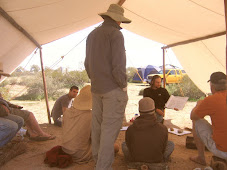

 Posts
Posts

